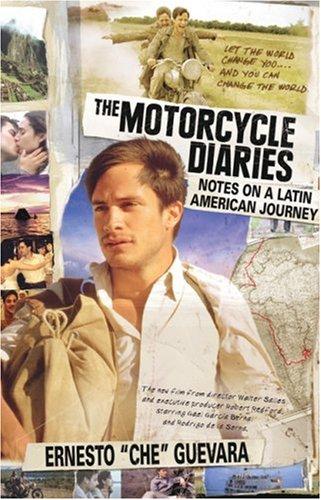
Talk to The Motorcycle Diaries: Notes on a Latin American Journey like its author wrote you back.
Get the ideas that fit your life — not generic summaries.
- Chat with the book
- Audiobook-style main ideas
- Adapts to your life and goals
- Helps you take action
What it argues
In January 1952, twenty-three-year-old Ernesto Guevara and his friend Alberto Granado set off from Buenos Aires on a 500cc Norton motorcycle they called La Poderosa — The Mighty One — planning to traverse South America. The motorcycle broke down repeatedly and was eventually abandoned. They traveled the rest of the way by any means available: hitchhiking, cargo boats, trucks, and on foot. The Motorcycle Diaries is Guevara's travel journal of those nine months, published posthumously in Spanish in 1992 and translated widely after the 2004 film adaptation.
The journey covers Argentina, Chile, Peru, Colombia, and Venezuela. What Guevara documents is less the travel itself — although the adventures are vivid — than the human landscape he encounters along the route. The indigenous communities of the Peruvian altiplano. The copper miners at Chuquicamata, owned by an American company and managed with contempt for the Chilean workers. The leper colony at San Pablo on the Amazon, where Guevara swam across the river on his birthday to celebrate with patients who were prohibited from contact with the medical staff.
What it gets right
- 1.
Guevara's encounter with the Chuquicamata copper miners — owned by an American company and treating Chilean workers as expendable — was among the formative political experiences the diary documents.
- 2.
The journey revealed Latin America as a single connected continent rather than a collection of separate national experiences — a pan-American consciousness that Guevara later carried into his revolutionary politics.
- 3.
The leper colony at San Pablo demonstrated Guevara's medical ethics in practice: his refusal to wear gloves, his willingness to be physically present with patients, his contempt for medical hierarchy that served status rather than care.
What it covers
Who wrote it
Ernesto Che Guevara (1928–1967) was an Argentine physician, Marxist revolutionary, and guerrilla leader who became a central figure in the Cuban Revolution alongside Fidel Castro. After helping establish the Castro government in Cuba, he pursued revolutions in Africa and Bolivia, where he was captured and executed by Bolivian forces in 1967. The Motorcycle Diaries were written in 1952 and published in Spanish in 1992, twenty-five years after his death. A second travel journal, Again with Che, was written by Alberto Granado and offers a companion account of the same journey.
