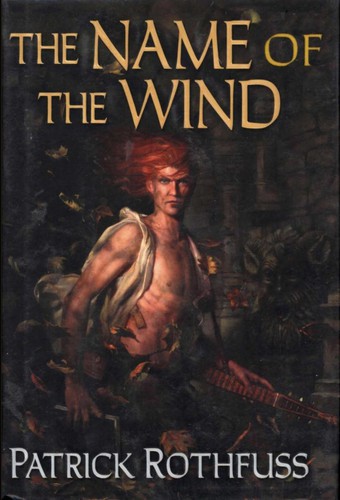
Talk to The Name of the Wind like its author wrote you back.
Get the ideas that fit your life — not generic summaries.
- Chat with the book
- Audiobook-style main ideas
- Adapts to your life and goals
- Helps you take action
What it argues
The Name of the Wind is the first volume of the Kingkiller Chronicle, told as the oral history of Kvothe — a figure of such mythological status that stories about him have become wildly contradictory and probably false. The framing device places an older, quieter Kvothe running a country inn under an assumed name, who agrees to spend three days telling a scribe his true story. What follows is the inner narrative: Kvothe's childhood as a traveling performer, the massacre that killed his family, years of survival on the streets, and his time at the University studying both conventional magic and the dangerous art of Naming.
The book is about the gap between legend and the person the legend obscures. Kvothe narrates his own story with full awareness of what he has become in popular imagination, and the real story is both more mundane and more painful than the myth. The University sections are the book's engine — a tightly structured academic fantasy where tuition is a real financial problem, social class determines access, and magic (Sympathy) works by rules of physics and mental concentration rather than wand-waving.
What it gets right
- 1.
Legend and reality are almost completely different things. The Kvothe of reputation and the Kvothe of his own narration barely resemble each other, and the novel holds that gap open deliberately.
- 2.
Rothfuss's Sympathy magic system is one of the most intellectually rigorous in modern fantasy — it works by physics, mental discipline, and the conservation of energy, not mysticism.
- 3.
Poverty is treated as a genuine obstacle, not as character-building backdrop. Kvothe's tuition struggles are more stressful than most of his magical conflicts.
What it covers
Who wrote it
Patrick Rothfuss is an American author who published The Name of the Wind in 2007 after a decade of revision. It was an immediate bestseller and won the Quill Award for Sci-Fi/Fantasy. The sequel, The Wise Man's Fear, appeared in 2011. The third volume of the Kingkiller Chronicle has been in progress for over a decade with no publication date announced. Rothfuss also runs a charity called Worldbuilders. He is known for meticulous attention to prose craft within genre fiction.
