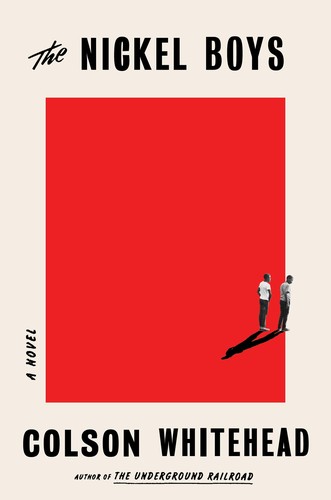
Talk to The Nickel Boys like its author wrote you back.
Get the ideas that fit your life — not generic summaries.
- Chat with the book
- Audiobook-style main ideas
- Adapts to your life and goals
- Helps you take action
What it argues
The Nickel Boys is based on the Dozier School for Boys in Florida, a reform school that operated for over a century and was the site of sustained physical, sexual, and emotional abuse — particularly of its Black students. Whitehead follows Elwood Curtis, a Black teenager in early-1960s Tallahassee who is headed toward college on a scholarship when a single act of misfortune lands him at Nickel Academy. There he meets Turner, another Black boy with a more pragmatic and less idealistic view of the world, and the novel alternates between their time at Nickel and a present-day frame whose relationship to the past is withheld until late in the book.
Elwood is defined by his faith in Martin Luther King's vision of a better America — he owns an LP of one of King's speeches and its language runs through the novel like a refrain against which reality keeps pressing. The novel is a sustained examination of what happens to that faith when institutions designed to break people are functioning exactly as they were designed to. Turner, Elwood's counterpart, has no faith in the system to begin with, which makes him both more cynical and, in certain ways, more honest.
What it gets right
- 1.
The Dozier School was a real institution — the novel is grounded in documented history, and the terror of it comes partly from its absolute believability as an American institution.
- 2.
Elwood and Turner represent two distinct responses to systemic injustice: faith in the promised arc and a clear-eyed refusal to believe in it. The novel doesn't declare a winner.
- 3.
The King speech LP that Elwood carries is the novel's central image — it represents a version of America that Nickel exists specifically to negate, and Whitehead returns to it with increasing irony.
What it covers
Who wrote it
Colson Whitehead is an American novelist born in 1969 in New York City. He is the author of eight novels, including The Intuitionist (1999), Zone One (2011), The Underground Railroad (2016), and Harlem Shuffle (2021). The Nickel Boys (2019) won the Pulitzer Prize for Fiction, making Whitehead one of the very few authors to win the Pulitzer Prize twice. The Underground Railroad also won the Pulitzer in 2017, as well as the National Book Award. Whitehead teaches at NYU and lives in New York.
