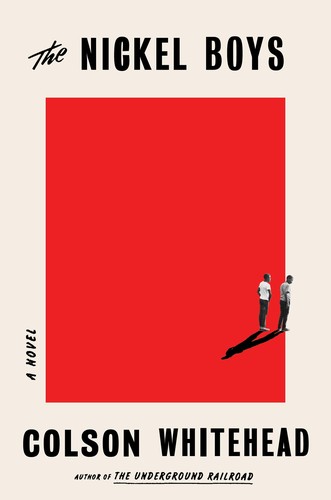
The Nickel Boys by Colson Whitehead is a 2019 historical fiction book about racial injustice and incarceration, lost futures, survival and complicity. The Dozier School was a real institution — the novel is grounded in documented history, and the terror of it comes partly from its absolute believability as an American institution.
Summary
The Nickel Boys is based on the Dozier School for Boys in Florida, a reform school that operated for over a century and was the site of sustained physical, sexual, and emotional abuse — particularly of its Black students. Whitehead follows Elwood Curtis, a Black teenager in early-1960s Tallahassee who is headed toward college on a scholarship when a single act of misfortune lands him at Nickel Academy. There he meets Turner, another Black boy with a more pragmatic and less idealistic view of the world, and the novel alternates between their time at Nickel and a present-day frame whose relationship to the past is withheld until late in the book.
Elwood is defined by his faith in Martin Luther King's vision of a better America — he owns an LP of one of King's speeches and its language runs through the novel like a refrain against which reality keeps pressing. The novel is a sustained examination of what happens to that faith when institutions designed to break people are functioning exactly as they were designed to. Turner, Elwood's counterpart, has no faith in the system to begin with, which makes him both more cynical and, in certain ways, more honest.
The prose is spare and precise in a way that matches the subject. Where The Underground Railroad is structurally expansive and stylized, The Nickel Boys is compressed and realistic — it reads like a short novel in the best sense, every sentence earning its place. The final structural revelation reframes everything that came before without feeling like a twist for its own sake; it changes what the novel is actually about.
This is a novel about the gap between what America says about itself and what its institutions actually do, told through two boys whose friendship is tested by whether survival requires abandoning belief in justice. It won the 2020 Pulitzer Prize. It is also a short novel — around 220 pages — and can be read in a single sitting if you can bear it.
Talk to The Nickel Boys like its author wrote you back.
Get the ideas that fit your life — not generic summaries.
- Chat with the book
- Audiobook-style main ideas
- Adapts to your life and goals
- Helps you take action
Key takeaways
- 1.
The Dozier School was a real institution — the novel is grounded in documented history, and the terror of it comes partly from its absolute believability as an American institution.
- 2.
Elwood and Turner represent two distinct responses to systemic injustice: faith in the promised arc and a clear-eyed refusal to believe in it. The novel doesn't declare a winner.
- 3.
The King speech LP that Elwood carries is the novel's central image — it represents a version of America that Nickel exists specifically to negate, and Whitehead returns to it with increasing irony.
- 4.
Turner's pragmatism is not depicted as moral failure but as adaptive rationality — a response to a system that punishes idealism — which makes the novel's moral argument more complicated than it initially appears.
- 5.
The structural twist in the final section is the novel's biggest risk and its biggest payoff — it reframes the entire story as being about something different from what you thought, in a way that deepens rather than cheapens what came before.
- 6.
Whitehead is careful about the administration of Nickel — the white staff are not uniformly monstrous but are depicted as people who have made ordinary moral accommodations that add up to something horrific.
- 7.
The novel asks what it costs to survive an institution like Nickel, and whether survival and integrity can coexist — it doesn't offer an optimistic answer.
- 8.
The short form suits the material: the compression creates a sense of suffocation that mirrors the characters' experience, and nothing is allowed to dilute the central horror.
Discussion questions
Use these on your own, with a book club, or as chat starters in Superbook. Book club version, ready to copy or print →
- 1.
Elwood is sustained by his faith in King's vision of America. Does the novel suggest this faith is admirable, naive, or both? Does it change your answer that the novel is set in the early 1960s rather than the present?
- 2.
Turner tells Elwood early on that the only way to survive is to not make trouble. Is he right? Does the novel endorse his approach, or does it ultimately judge him for it?
- 3.
The Nickel Academy is based on a real school. Does knowing this change how you read the novel? Does fiction feel like the right form for this material?
- 4.
The final structural twist — which we can discuss openly here — reframes whose story this has been all along. Did you see it coming? Does it change how you understand Elwood and Turner's relationship?
- 5.
The staff at Nickel are not all depicted as sadistic monsters — some of them are mundane, rule-following people. Does that make the novel's argument more or less disturbing?
- 6.
Elwood's grandmother has a particular kind of faith in hard work and propriety as a path forward. The novel gently suggests she is wrong. Is it fair to her generation's choices?
- 7.
Compare Elwood and Turner to characters in other novels about institutional injustice you've read. What does Whitehead do differently with the idealist/realist pairing?
- 8.
The novel is very short for its subject matter. Did the compression feel like a strength or a limitation? Were there things you wanted more of?
- 9.
How does The Nickel Boys fit alongside The Underground Railroad as a body of work? Does reading both novels change what you think Whitehead is trying to do?
- 10.
The reckoning that happens at the end of the novel — the excavation of the school grounds — is real. How does historical reality function in the novel's conclusion? Does the factual ending feel earned by the fiction?
- 11.
Several real reform schools like the Dozier School are still operating today. Does the novel feel like a document of history or a description of the present?
- 12.
Who should have to read this novel? Is there a version of this question that asks whether certain American citizens have an obligation to know this history?
Themes
Frequently asked questions
-
Is The Nickel Boys worth reading?
Yes. It is the more emotionally direct of Whitehead's two Pulitzer winners — shorter, less formally ambitious, and more devastatingly immediate. The final section of the novel is as good as anything he has written.
-
Should I read The Underground Railroad first?
They are completely independent novels. The Nickel Boys is shorter and arguably more accessible. Reading them in either order works; reading both rewards the investment significantly.
-
Is The Nickel Boys based on a true story?
Yes. The Arthur G. Dozier School for Boys in Marianna, Florida, operated from 1900 until 2011 and was the subject of extensive investigations documenting abuse and unmarked graves. The University of South Florida identified the remains of dozens of former students in a forensic investigation Whitehead draws on.
-
How long does it take to read The Nickel Boys?
Around four to five hours — it is roughly 220 pages and very cleanly written. Many readers finish it in a single day. The shortness is part of its impact; it doesn't give you room to breathe.
-
Who shouldn't read this book?
Readers who cannot engage with detailed depictions of institutional violence against children and teenagers. The novel is not graphic for its own sake but it does not look away. Also readers who want closure — the ending is partial and deliberately so.
Similar books
The Underground Railroad
Colson Whitehead
Just Mercy: A Story of Justice and Redemption
Bryan Stevenson
The New Jim Crow: Mass Incarceration in the Age of Colorblindness
Michelle Alexander
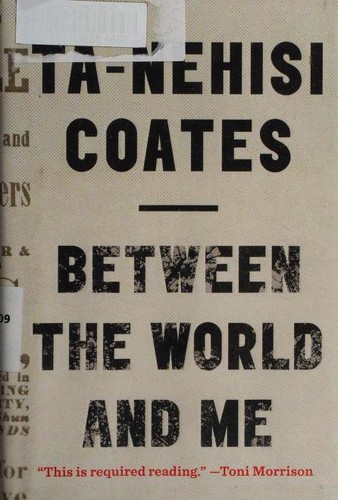
Between the World and Me
Ta-Nehisi Coates
