Talk to The Night Circus like its author wrote you back.
Get the ideas that fit your life — not generic summaries.
- Chat with the book
- Audiobook-style main ideas
- Adapts to your life and goals
- Helps you take action
What it argues
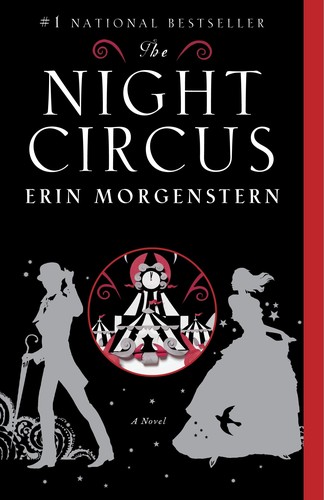
Le Cirque des Rêves appears overnight, with no announcement — black and white striped tents that smell of caramel and bonfire smoke, open only after dark, filled with impossible things. The Night Circus follows two magicians, Celia and Marco, who have been trained since childhood by rival instructors and set against each other in a competition neither of them chose, whose rules neither of them fully understands, using the circus itself as the arena. They fall in love without knowing they are competitors. The competition is a trap.
The novel is not primarily a plot machine. Morgenstern is most interested in the experience of wonder — what it feels like to encounter something genuinely extraordinary, to be inside a world that has been made with love and skill. The circus's tents get chapter-length descriptions: a cloud maze, a garden of ice, a room of infinite locks and keys. These passages are the heart of the book. The story surrounds them and gives them emotional stakes, but the circus is the real subject.
What it gets right
- 1.
The circus is a collaborative artwork built from competition — Celia and Marco's rivalry produces something neither of them could have made alone, which is the novel's central irony.
- 2.
Wonder is treated as a serious aesthetic value, not just atmosphere; Morgenstern argues, implicitly, that the capacity to be enchanted is worth protecting.
- 3.
The non-linear structure mirrors the circus experience: you don't move through it chronologically, you drift between moments.
What it covers
Who wrote it
Erin Morgenstern is an American author and multimedia artist born in 1978 in Massachusetts. The Night Circus was her debut novel, published in 2011 after being developed from National Novel Writing Month drafts. It became an international bestseller, selling over a million copies, and has been translated into dozens of languages. Her second novel, The Starless Sea, published in 2019, is set in an underground library and shares The Night Circus's preoccupation with stories, wonder, and constructed worlds. Morgenstern is also a visual artist.
