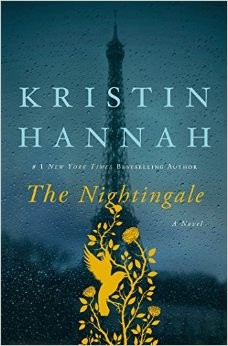
Talk to The Nightingale like its author wrote you back.
Get the ideas that fit your life — not generic summaries.
- Chat with the book
- Audiobook-style main ideas
- Adapts to your life and goals
- Helps you take action
The Nightingale, in detail
France, 1939-1944. Two sisters, Vianne and Isabelle Rossignol, survive the German occupation in entirely different ways. Vianne, practical and maternal, is left behind in the Loire Valley when her husband goes to war and tries to keep her daughter alive and her household intact as German officers are billeted in her home. Isabelle, younger and impetuous, throws herself into the Resistance — becoming, eventually, the Nightingale, the courier who guides shot-down Allied airmen across the Pyrenees to Spain. The novel moves between their stories across five years of occupation, devastation, and impossible choices.
Hannah's subject is specifically about women and war: what women did that official history didn't record, and what surviving required when survival itself was morally complicated. Vianne's trajectory is in many ways the harder story — she isn't brave in the romantic sense Isabelle is; she makes compromises and accommodations that she has to live with afterward. The novel doesn't judge her for them, but it doesn't let her off the hook either. Isabelle's story is more conventional heroism, and Hannah writes it with the open emotional register that is her signature.
The prose is emotional and accessible, not literary in the spare sense. Hannah is a commercial novelist who genuinely cares about historical accuracy, and the wartime France she constructs has the texture of research worn comfortably rather than displayed. She does occasionally hold the camera on the worst of what happened long enough that the novel begins to tip into trauma-as-spectacle, but she generally catches herself.
The Nightingale works best as a corrective to war narratives that center men. It sold fifteen million copies for a reason: Hannah found a massive audience hungry for World War II fiction that acknowledged what women did, endured, and chose. It isn't the deepest novel in its genre — All the Light We Cannot See is more precisely crafted — but it's more emotionally direct, which is what most of its readers were looking for.
The big ideas
- 1.
Vianne's story is as important as Isabelle's, and harder: survival through accommodation has its own moral weight, and the novel takes it seriously.
- 2.
The framing device — an old woman in 1995 who is one of the sisters — works because it makes the question of memory and acknowledgment part of the novel's argument.
- 3.
Hannah is writing back against a historiography that centered men in World War II; the novel makes the argument with its existence as much as with its content.
