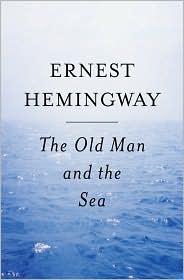
The Old Man and the Sea by Ernest Hemingway is a 1952 literary fiction book about perseverance, pride and dignity, man versus nature. Defeat and dignity are not opposites. Santiago loses the fish to the sharks, but the way he fought for it is the measure of his life.
Summary
The Old Man and the Sea is Hemingway's last major work of fiction, the short novel that won him the Pulitzer Prize in 1953 and contributed to his Nobel Prize in 1954. It is the story of Santiago, an aging Cuban fisherman who has gone 84 days without catching a fish. His young companion Manolin has been ordered by his parents to fish with a more successful crew, but still cares for the old man. One morning Santiago rows far out into the Gulf Stream alone and hooks an enormous marlin — the largest he has ever seen. What follows is a three-day struggle at sea that becomes the defining experience of his life.
The book is about what happens when a person encounters something at the absolute limit of their capability. Santiago talks to himself, to the fish, to his cramped hand; he suffers; he doubts; he keeps going. He is not strong enough to simply overpower the marlin. He must outlast it — through willpower, craft, and a kind of love for the creature he is trying to kill. When he finally brings it alongside the boat, the sharks come. By the time he reaches shore, only the skeleton remains. He has won and lost simultaneously.
Hemingway's prose here is at its most distilled — simpler than the Paris novels, almost biblical in cadence. The story invites allegorical reading (the marlin as aspiration, as God, as worthy opponent, as self) without requiring any of them. It functions entirely as a literal adventure story of exceptional intensity. The sea is rendered with the specificity of someone who knew it intimately, and Santiago's interior voice — dignified, practical, quietly desperate — is among Hemingway's finest achievements.
At 127 pages, this is a brief book that rewards slow reading. It can feel slight on first encounter; it accumulates on reflection. Readers who find Hemingway's stoicism exhausting may find Santiago's inner monologue repetitive. But for readers open to a story about late-career endurance, about doing something difficult with full knowledge of diminishing returns, it is one of the most concentrated pieces of fiction in American literature.
Talk to The Old Man and the Sea like its author wrote you back.
Get the ideas that fit your life — not generic summaries.
- Chat with the book
- Audiobook-style main ideas
- Adapts to your life and goals
- Helps you take action
Key takeaways
- 1.
Defeat and dignity are not opposites. Santiago loses the fish to the sharks, but the way he fought for it is the measure of his life.
- 2.
The code hero at the end of his career: Santiago is past his prime, and the novel doesn't pretend otherwise. His greatness is that he goes out anyway.
- 3.
The marlin is not merely prey — Santiago calls it brother, admires it, feels genuine love for it. Hemingway treats the killing as a sacred contract, not domination.
- 4.
Isolation as condition rather than choice: Santiago is alone at sea because the world has moved on from him, not because he sought solitude. The novel is clear-eyed about this.
- 5.
The apprentice Manolin represents what Santiago was and what the old man has passed on. The novel is partly about what survives transmission between generations.
- 6.
Repetition in Santiago's thoughts — 'I must not think like that. I must think only about what is necessary' — is a discipline, not a tic. The mind must be managed like the body.
- 7.
Physical pain is documented without complaint. Hemingway records Santiago's cut hand, his aching back, his thirst with clinical precision — and the lack of self-pity is itself a moral stance.
- 8.
The ending is deliberately ambiguous: the tourists mistake the marlin's skeleton for a shark's. What we do is misread by others. The achievement is real regardless.
Discussion questions
Use these on your own, with a book club, or as chat starters in Superbook. Book club version, ready to copy or print →
- 1.
Santiago says 'a man can be destroyed but not defeated.' The sharks destroy his catch — is he defeated? Does the novel agree with its own line?
- 2.
The marlin is enormous, worthy, beautiful — and Santiago kills it anyway. How does Hemingway navigate the tension between admiration and killing? Does he resolve it?
- 3.
Santiago talks to himself, to the fish, to his hand. Is this portrayed as a symptom of his isolation, a survival strategy, or something else?
- 4.
Manolin is ordered away by his parents but remains devoted to Santiago. What does the novel say about loyalty that exceeds usefulness?
- 5.
The novel won Hemingway the Pulitzer and helped secure the Nobel. Some critics think it is lesser Hemingway — too neat, too allegorical. Do you agree?
- 6.
The tourists at the end mistake the skeleton for a shark. Is that moment bitter, ironic, resigned, or something else? Does it undercut the novel's message?
- 7.
Compare Santiago to the narrator of The Sun Also Rises or Frederic Henry in A Farewell to Arms. Is the code hero more convincing when he's old?
- 8.
The sea in this novel is both beautiful and killing. Does Hemingway romanticize it, or does he maintain an honest reckoning with its indifference?
- 9.
Santiago thinks about Joe DiMaggio repeatedly. What does DiMaggio represent for him? Is the novel nostalgic about American achievement in a way that dates it?
- 10.
At what point in your life did you feel most like Santiago — doing something difficult, alone, with the outcome uncertain? Does the novel speak to that?
- 11.
The novella is 127 pages. Does brevity serve it or limit it? Would it be a different — better or worse — book at three times the length?
- 12.
Is The Old Man and the Sea primarily a story about fishing, or is the fishing purely allegorical? Does it matter?
Themes
Frequently asked questions
-
How long is The Old Man and the Sea?
About 127 pages — it is a novella, not a full-length novel. At an average reading pace you can finish it in two hours. Many readers read it in a single sitting, which is probably the best way.
-
Is The Old Man and the Sea hard to read?
No. It is among the most accessible things Hemingway wrote — short sentences, simple vocabulary, a single sustained situation. The difficulty is emotional rather than linguistic: it demands patience with a very slow-moving interior drama.
-
Why is it considered a classic?
It distilled Hemingway's central concerns — endurance, dignity, the code hero in extremis — into the most concentrated form he ever achieved. It is also technically brilliant: almost nothing happens for 127 pages, yet it is tense throughout. That is a very difficult thing to pull off.
-
Who shouldn't read it?
Readers who need narrative momentum or character development. Santiago barely changes; the situation barely changes. It is a book about enduring a fixed condition with grace, not about transformation.
-
Does Santiago catch the fish?
He brings it alongside the boat, but sharks strip it to a skeleton before he reaches shore. Whether this counts as catching it is part of what the novel invites you to decide.