Talk to The Omnivore's Dilemma like its author wrote you back.
Get the ideas that fit your life — not generic summaries.
- Chat with the book
- Audiobook-style main ideas
- Adapts to your life and goals
- Helps you take action
What it argues
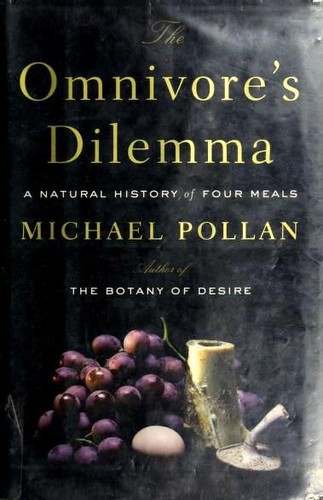
The Omnivore's Dilemma is Michael Pollan's investigation into four food chains — industrial, industrial organic, local pastoral, and hunted-and-gathered — organized around the question of what we should eat. The book's central observation is that humans are generalist eaters capable of eating almost anything, which is both an evolutionary advantage and the source of the dilemma: without fixed instincts dictating our diet, we are perpetually anxious about what to put on our plates, and vulnerable to whatever cultural or commercial forces promise to resolve that anxiety.
The industrial food chain occupies the first third of the book. Pollan traces a McDonald's meal back to its origins in an Iowa cornfield, following the logic of industrial agriculture: how federal corn subsidies created a surplus that had to be disposed of somewhere, leading to corn's insertion into virtually every processed food and to its use as feed for cattle that evolved to eat grass. The result is a food system optimized for calories per dollar but not for nutrition, ecological sustainability, or animal welfare.
What it gets right
- 1.
The industrial corn complex underpins the American food system: corn subsidies created surpluses that are now embedded in nearly every processed food and in the feed for most American livestock.
- 2.
Cattle evolved to eat grass but are raised on corn in industrial feedlots because corn makes them fat faster and produces the marbled beef Americans prefer.
- 3.
Industrial organic food largely replicates the industrial model — long supply chains, monocultures, and wage labor — while meeting the letter of organic certification.
What it covers
Who wrote it
Michael Pollan is an American journalist and author whose work focuses on the intersection of humans and nature, particularly food and agriculture. He is a professor of science journalism at UC Berkeley's Graduate School of Journalism and a contributing writer to the New York Times Magazine. His books include In Defense of Food, The Botany of Desire, How to Change Your Mind, and Cooked. The Omnivore's Dilemma, published in 2006, is widely regarded as one of the most influential food books of the past two decades and helped launch a mainstream conversation about sustainable agriculture and food ethics.
