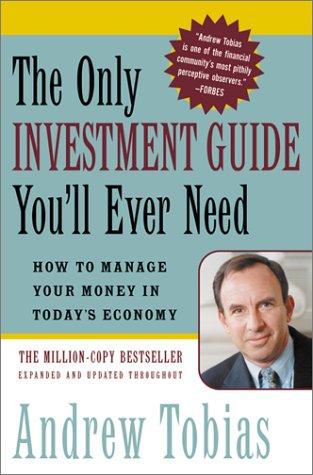
Talk to The Only Investment Guide You'll Ever Need like its author wrote you back.
Get the ideas that fit your life — not generic summaries.
- Chat with the book
- Audiobook-style main ideas
- Adapts to your life and goals
- Helps you take action
What it argues
The Only Investment Guide You'll Ever Need has been in print since 1978, updated through multiple editions, which is itself a statement about the quality of its core advice. Andrew Tobias, a financial journalist with an irreverent voice, wrote it as a practical companion for ordinary people who wanted to manage their money without being sold to by financial professionals. Much of what the book recommends would be considered standard Boglehead wisdom today, but Tobias arrived at it through wry personal experience and a reporter's skepticism of industry claims.
The book's first principle is that the best investment you can make is paying off high-interest debt and avoiding consumer products you don't actually need. Tobias is funny about this in a way few financial writers manage — he spends considerable time on the economics of cigarettes, overpriced insurance products, and the hidden costs of car ownership. The saving argument comes before the investing argument, and it is made with specific arithmetic rather than vague exhortation.
What it gets right
- 1.
The most reliable investment is avoiding unnecessary spending. Not buying something you don't need at 20% credit card interest is an instant 20% return.
- 2.
Pay off high-interest debt before investing. There is no investment that reliably earns more than the guaranteed return of eliminating a 15 to 20 percent interest charge.
- 3.
Insurance is often oversold. Buy term life insurance if you have dependents, and avoid whole life and other hybrid products that bundle insurance with investing.
What it covers
Who wrote it
Andrew Tobias is an American financial journalist and author who has written extensively about personal finance, investing, and consumer economics since the 1970s. In addition to The Only Investment Guide You'll Ever Need, he has written about insurance industry practices, stock market history, and investor behavior. He served as treasurer of the Democratic National Committee for many years. The Only Investment Guide You'll Ever Need has gone through numerous updated editions since its original publication in 1978 and remains one of the best-selling personal finance books in print.
