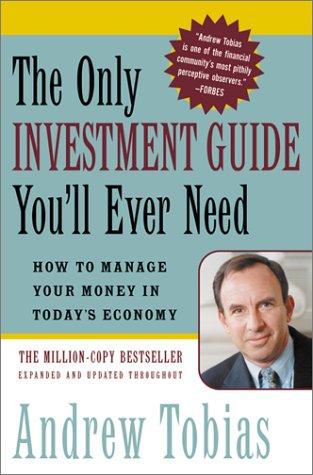
Talk to The Only Investment Guide You'll Ever Need like its author wrote you back.
Get the ideas that fit your life — not generic summaries.
- Chat with the book
- Audiobook-style main ideas
- Adapts to your life and goals
- Helps you take action
The Only Investment Guide You'll Ever Need, in detail
The Only Investment Guide You'll Ever Need has been in print since 1978, updated through multiple editions, which is itself a statement about the quality of its core advice. Andrew Tobias, a financial journalist with an irreverent voice, wrote it as a practical companion for ordinary people who wanted to manage their money without being sold to by financial professionals. Much of what the book recommends would be considered standard Boglehead wisdom today, but Tobias arrived at it through wry personal experience and a reporter's skepticism of industry claims.
The book's first principle is that the best investment you can make is paying off high-interest debt and avoiding consumer products you don't actually need. Tobias is funny about this in a way few financial writers manage — he spends considerable time on the economics of cigarettes, overpriced insurance products, and the hidden costs of car ownership. The saving argument comes before the investing argument, and it is made with specific arithmetic rather than vague exhortation.
The investing section covers stocks, bonds, mutual funds, real estate, and a parade of speculative investments Tobias treats with suspicion. His consistent recommendation is low-cost, diversified, tax-advantaged investing — a message that was contrarian in 1978 and remains underappreciated today. He is particularly good at explaining why commissions, taxes, and fees are the investor's enemy rather than the market itself.
The book's main limitation is that specific product recommendations date quickly — funds, brokers, and tax rules change with each edition. What doesn't change is the underlying framework: spend less than you earn, pay off debt, invest the difference in boring diversified instruments, and ignore salespeople trying to complicate the process. The humor keeps it readable across decades in a way that more earnest books do not achieve.
The big ideas
- 1.
The most reliable investment is avoiding unnecessary spending. Not buying something you don't need at 20% credit card interest is an instant 20% return.
- 2.
Pay off high-interest debt before investing. There is no investment that reliably earns more than the guaranteed return of eliminating a 15 to 20 percent interest charge.
- 3.
Insurance is often oversold. Buy term life insurance if you have dependents, and avoid whole life and other hybrid products that bundle insurance with investing.
