Talk to The Perfection Trap like its author wrote you back.
Get the ideas that fit your life — not generic summaries.
- Chat with the book
- Audiobook-style main ideas
- Adapts to your life and goals
- Helps you take action
The Perfection Trap, in detail
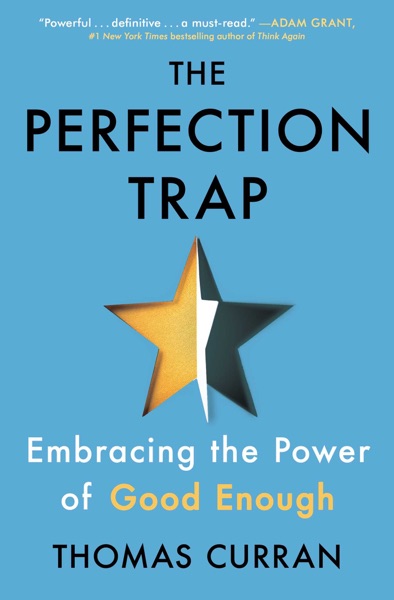
The Perfection Trap is a social psychologist's case that perfectionism isn't a personality quirk or an asset but a cultural epidemic — and that rates of perfectionism have risen sharply over the past three decades, driven by specific social and economic forces. Thomas Curran, a professor at the London School of Economics who has spent fifteen years studying perfectionism, uses the book to argue that the problem is not individual but structural, and that individual solutions (self-compassion, lowering standards, therapy) are necessary but not sufficient.
Curran distinguishes three types of perfectionism. Self-oriented perfectionism imposes unrealistic standards on oneself. Other-oriented perfectionism imposes them on others. And socially prescribed perfectionism — the most damaging type — is the belief that others expect you to be perfect and will reject you if you're not. All three have risen since the 1980s, but socially prescribed perfectionism has risen fastest, and it's the form most strongly linked to anxiety, depression, eating disorders, and suicidal ideation.
The driving forces, Curran argues, are neoliberal economic culture — competition, meritocracy, continuous self-improvement as moral duty — combined with social media environments that make comparative evaluation constant and inescapable. The book traces these forces historically, showing how the ideology of individual optimization spread from elite institutions into mass culture. The result is a society in which falling short of an impossible standard is experienced as personal failure rather than as evidence that the standard was wrong.
The book's final section is the most contested. Curran's prescription involves both individual practices (self-compassion, reducing comparative evaluation, therapy) and structural change (limiting the competitive dynamics of schooling, regulating social media, rethinking how organizations measure performance). Critics argue the structural prescriptions are underdeveloped; the book spends more energy diagnosing than solving. But the diagnosis is sharp and evidence-based, and Curran's willingness to locate perfectionism's roots in political economy rather than individual psychology is genuinely distinguishing. For readers whose perfectionism has resisted individual interventions, this book suggests the intervention might need to operate at a different level.
The big ideas
- 1.
Perfectionism has increased significantly over the past three decades, particularly among young people, and rates continue to rise.
- 2.
Socially prescribed perfectionism — the belief that others expect you to be perfect — is the most damaging form and is the type rising fastest.
- 3.
Perfectionism is not the same as high standards. High standards paired with self-compassion for failure produce good outcomes; perfectionism paired with fear of failure produces anxiety and avoidance.
