Memoir · Book club
The Pianist: The Extraordinary True Story of One Man's Survival in Warsaw, 1939-45 book club questions
Here are 11 book club questions for The Pianist: The Extraordinary True Story of One Man's Survival in Warsaw, 1939-45 by Wladyslaw Szpilman, ordered to open easily and end somewhere worth arguing about. Copy them, print them, or bring them up one at a time.
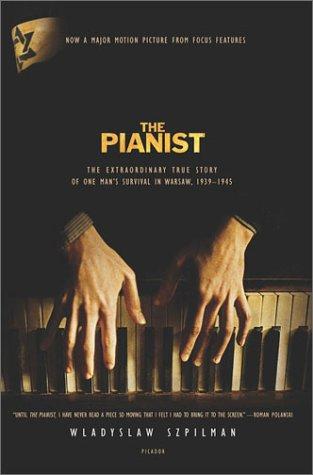
The Pianist is Wladyslaw Szpilman's account of surviving the German occupation of Warsaw from 1939 to 1945.
Wladyslaw Szpilman · 1999 · 3h 40m
Full summary and key takeaways →The 11 questions
- 1.
Szpilman writes without evident anger or bitterness about events that destroyed most of his world. How do you interpret that restraint — is it a coping mechanism, an artistic choice, or something else?
- 2.
The book was suppressed for over fifty years. What does that suppression reveal about the political uses of Holocaust memory?
- 3.
Hosenfeld saved several people and kept records of it. What does his example suggest about the possibilities and limits of individual conscience inside a criminal regime?
- 4.
How does the piano and music function in the memoir — not symbolically but practically, in terms of what actually happens in the scenes where music appears?
- 5.
Szpilman survived while his entire family was killed. Does the book address survivor's guilt? How is it present or absent?
- 6.
The memoir was written in 1945, directly after liberation. How might it have been different had Szpilman waited twenty years to write it?
- 7.
What obligations, if any, did non-Jewish Poles have toward their Jewish neighbors during the occupation? Does the book take a position?
- 8.
The German officer who saves Szpilman later dies in a Soviet camp. What does that ending do to the moral framework of the story?
- 9.
Which scene or passage in the book stayed with you longest, and why?
- 10.
The Roman Polanski film adaptation is widely seen as faithful. Does knowing the film affect how you read the book?
- 11.
What does Szpilman's experience suggest about the role of luck versus agency in survival under extreme conditions?
How to run the discussion
- Pick six to eight, not all of them. An hour of real discussion covers fewer questions than anyone expects, and racing the list is what makes a book club feel like homework.
- Open with what people noticed, not what they concluded. Asking for a verdict first hardens opinions before anyone has heard each other.
- Let the disagreement run. The questions below that split a room are the ones worth the time; the ones everyone answers the same way can be skipped.
- Ask the quiet person a specific question. A direct, narrow question is far easier to answer than an open invitation to contribute.
Themes worth steering toward
If the conversation stalls, these are the threads that usually restart it.
Common questions
What are good book club questions for The Pianist: The Extraordinary True Story of One Man's Survival in Warsaw, 1939-45?
Here are 11 book club questions for The Pianist: The Extraordinary True Story of One Man's Survival in Warsaw, 1939-45 by Wladyslaw Szpilman, ordered to open easily and end somewhere worth arguing about. The strongest openers ask what each reader noticed rather than what they concluded, and the discussion usually turns on survival, war, music.
How long should a book club discussion of The Pianist: The Extraordinary True Story of One Man's Survival in Warsaw, 1939-45 last?
Most groups run 60 to 90 minutes of actual discussion. That is roughly six to eight questions, not all of them, so pick the ones that suit your group rather than working down the list in order.
What are the main themes in The Pianist: The Extraordinary True Story of One Man's Survival in Warsaw, 1939-45?
Survival, War, Music, Holocaust, Human dignity. Those are the threads most likely to divide a room, which makes them the useful places to steer a discussion that has gone quiet.
Picking the next one? See books like The Pianist: The Extraordinary True Story of One Man's Survival in Warsaw, 1939-45 or questions for other book club picks.
