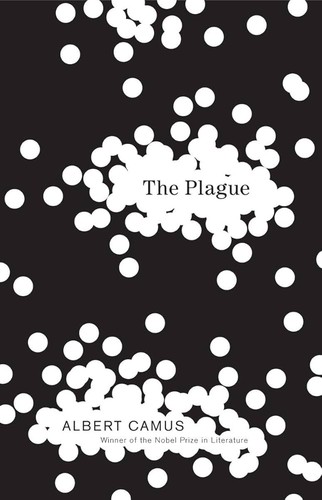
Talk to The Plague like its author wrote you back.
Get the ideas that fit your life — not generic summaries.
- Chat with the book
- Audiobook-style main ideas
- Adapts to your life and goals
- Helps you take action
What it argues
The town of Oran, on the Algerian coast, is sealed off after an outbreak of bubonic plague. The novel follows several residents over the months of quarantine: Dr. Bernard Rieux, who narrates at a remove and tends the sick without illusion; Tarrou, a philosophical wanderer who organizes volunteer sanitation squads; Rambert, a journalist who spends months trying to escape and eventually chooses to stay; Grand, a minor civil servant who works on a single sentence of a novel throughout the epidemic; and Paneloux, a Jesuit priest who preaches God's judgment and then quietly falls apart when he encounters the death of a child.
The Plague is Camus's most directly political and most compassionate novel. It was written between 1942 and 1947 and read immediately as an allegory for the Nazi Occupation — the plague as fascism, Oran as France, the question of how to live under an inhuman force that will kill you regardless of what you believe. But the novel is careful not to reduce to allegory. The plague is also simply the plague: arbitrary, bacterial, indifferent to virtue or vice. And what interests Camus is not heroism but persistence — how ordinary people find ways to act decently when the situation offers no exit and no reward.
What it gets right
- 1.
Camus's answer to absurdity in The Plague is not the solitary stoicism of The Stranger but collective action: doing the work, showing up, maintaining sanitation squads even when the outcome is uncertain.
- 2.
The plague-as-allegory for fascism is real but the novel resists reduction to it. The point is that any inhuman force — political, biological, existential — poses the same question: how do you live and act under conditions that offer no exit?
- 3.
Rieux's dry, administrative narration is a moral stance: he refuses to aestheticize suffering, refuses heroic elevation, refuses self-congratulation. The voice itself embodies the ethics the novel advocates.
What it covers
Who wrote it
Albert Camus (1913–1960) was a French-Algerian author, philosopher, and journalist who won the Nobel Prize in Literature in 1957. His major works include The Stranger (1942), The Plague (1947), The Fall (1956), and the philosophical essay The Myth of Sisyphus (1942). Camus was associated with French existentialism but resisted the label, preferring to describe himself as a philosopher of the absurd. He died in a car accident at 46, widely mourned as one of the great European voices of his century.
