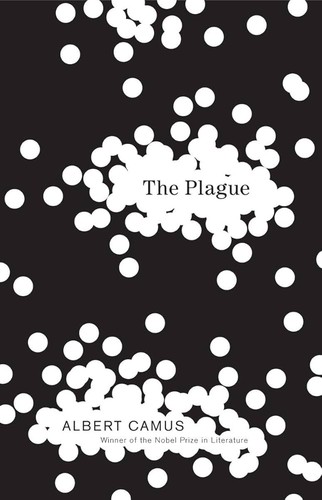
The Plague by Albert Camus is a 1947 literary fiction book about collective suffering, solidarity and isolation, resistance and complicity. Camus's answer to absurdity in The Plague is not the solitary stoicism of The Stranger but collective action: doing the work, showing up, maintaining sanitation squads even when the outcome is uncertain.
Summary
The town of Oran, on the Algerian coast, is sealed off after an outbreak of bubonic plague. The novel follows several residents over the months of quarantine: Dr. Bernard Rieux, who narrates at a remove and tends the sick without illusion; Tarrou, a philosophical wanderer who organizes volunteer sanitation squads; Rambert, a journalist who spends months trying to escape and eventually chooses to stay; Grand, a minor civil servant who works on a single sentence of a novel throughout the epidemic; and Paneloux, a Jesuit priest who preaches God's judgment and then quietly falls apart when he encounters the death of a child.
The Plague is Camus's most directly political and most compassionate novel. It was written between 1942 and 1947 and read immediately as an allegory for the Nazi Occupation — the plague as fascism, Oran as France, the question of how to live under an inhuman force that will kill you regardless of what you believe. But the novel is careful not to reduce to allegory. The plague is also simply the plague: arbitrary, bacterial, indifferent to virtue or vice. And what interests Camus is not heroism but persistence — how ordinary people find ways to act decently when the situation offers no exit and no reward.
The novel's moral center is Rieux's rejection of both religious consolation (Paneloux's God who punishes through pestilence) and romantic heroism (Tarrou's yearning for sainthood without God). Rieux simply does his job, tends his patients, keeps his records, and describes what he has witnessed. The voice is dry and administrative in a way that makes its occasional eruptions of feeling more powerful. The famous phrase "we learn in time of pestilence that there is more to admire in men than to despise" earns its weight because the novel has been absolutely rigorous in showing everything that is not admirable first.
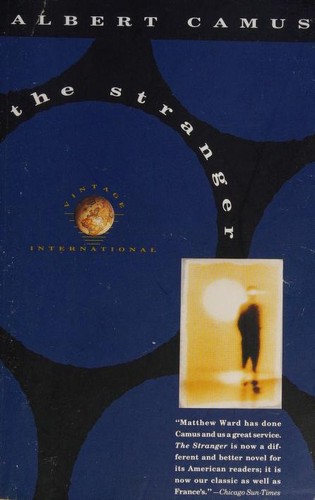
The Plague is more novelistically generous than The Stranger — it has actual characters, actual relationships, actual grief. It is also, for readers who encountered it during COVID-19, a different book than it was before. The quarantine chapters, the bureaucratic delays, the exhaustion of medical staff, the grief of families separated from the dying: readers who lived through 2020–2022 will find Camus's observations almost journalistic in their accuracy. The novel is long enough to require commitment and short enough that it never outstays its welcome.
Talk to The Plague like its author wrote you back.
Get the ideas that fit your life — not generic summaries.
- Chat with the book
- Audiobook-style main ideas
- Adapts to your life and goals
- Helps you take action
Key takeaways
- 1.
Camus's answer to absurdity in The Plague is not the solitary stoicism of The Stranger but collective action: doing the work, showing up, maintaining sanitation squads even when the outcome is uncertain.
- 2.
The plague-as-allegory for fascism is real but the novel resists reduction to it. The point is that any inhuman force — political, biological, existential — poses the same question: how do you live and act under conditions that offer no exit?
- 3.
Rieux's dry, administrative narration is a moral stance: he refuses to aestheticize suffering, refuses heroic elevation, refuses self-congratulation. The voice itself embodies the ethics the novel advocates.
- 4.
Father Paneloux begins by preaching that the plague is God's punishment and ends, after the death of a child, in a crisis that kills him. Camus treats this with sympathy, not contempt: belief confronting reality is not ridiculous, just inadequate.
- 5.
Tarrou wants to be 'a saint without God' — to achieve moral purity without religious framework. Camus seems to admire this while knowing it is not sustainable. Tarrou dies at the novel's end.
- 6.
Grand's single sentence novel — 'One fine morning in May, a trim young horsewoman was riding through the flower-filled lanes of the Bois de Boulogne' — is revised endlessly and never completed. He is the novel's purest and most unlikely hero.
- 7.
The COVID-19 pandemic revealed how precisely Camus had observed epidemic psychology: the initial denial, the bureaucratic delays, the exhaustion of caregivers, the ways isolation reshapes relationships.
- 8.
Unlike The Stranger, this novel argues that solidarity is not self-deception. The meaning of Oran's survivors is not found but made, through the accumulation of small, persistent acts of care.
Discussion questions
Use these on your own, with a book club, or as chat starters in Superbook. Book club version, ready to copy or print →
- 1.
Rieux refuses to call himself heroic and describes his work as simply doing what had to be done. Is that genuine humility, or is it a way of maintaining distance from what the work costs him?
- 2.
Paneloux's first sermon frames the plague as divine punishment; his second sermon, after the child's death, is theological but anguished. Which Paneloux is more honest, and does either position survive contact with what he witnessed?
- 3.
Tarrou wants sainthood without God. Is that coherent? Is it admirable? And does his death at the epidemic's end feel like the novel's verdict on his aspiration?
- 4.
Rambert spends most of the novel trying to escape to his girlfriend in Paris and is condemned for it by the reader (and by himself). But is his desire to leave legitimate? Does the novel judge him fairly?
- 5.
Grand is the novel's most unlikely hero. What does making him the center of the book's emotional resolution accomplish that a more conventionally heroic protagonist would not?
- 6.
The plague-as-fascism allegory was how contemporary French readers received it. If you read it as purely about disease, does the moral argument change?
- 7.
Many readers encountered this novel during COVID-19 quarantine. Did that context change what you found in it — for better or worse?
- 8.
Camus describes the plague as indifferent to virtue: good people die randomly alongside bad ones. How does the novel square that randomness with its argument that individual action matters?
- 9.
The narrator's identity is concealed until near the end, when we learn it is Rieux. Why does Camus withhold that information, and does the revelation change how you read what came before?
- 10.
Rieux's wife is ill and offstage throughout; she dies near the epidemic's end. Is her absence from the novel an artistic choice or a failure of the novel's humanism?
- 11.
Camus writes: 'There is more to admire in men than to despise.' Does the novel earn that line, or is it sentiment that the narrative doesn't fully support?
- 12.
Compare Camus's vision of collective response to catastrophe to how actual communities have responded to crises you know about. Where does the novel feel accurate and where idealized?
Themes
Frequently asked questions
-
Is The Plague worth reading in 2026?
More than ever, for readers who lived through COVID-19. Camus's observations about epidemic psychology, institutional inertia, and the ways enforced isolation reshapes human relationships are eerily precise. It is also a better novel than The Stranger in the conventional sense — it has fully realized characters and earned emotional weight.
-
Is The Plague hard to read?
No. It is longer and more conventional narratively than The Stranger, which makes it more accessible. The philosophical content is embedded in character and action rather than delivered through a detached narrator. The challenge is emotional rather than formal: it earns its grief honestly.
-
What is The Plague about, without spoilers?
A North African port city is quarantined during a plague epidemic, and the novel follows a doctor and several other characters through the months of isolation, watching how they respond to a situation that offers no exit. It is about solidarity, resistance, and what ordinary decency looks like under conditions that reward nihilism.
-
Is The Plague an allegory for the Nazi Occupation?
Yes, and Camus intended it to be read that way. Contemporary French readers understood it immediately as a meditation on how to live under an occupying force. But the allegory is embedded in a novel that works equally well as a story about actual disease, and Camus was careful not to reduce it to a single meaning.
-
Who shouldn't read The Plague?
Readers who find epidemic narratives distressing — especially in the post-COVID period — should approach carefully. The novel is detailed about the physical reality of mass death in ways that are honest rather than exploitative but can be difficult to read in certain states of mind. Psychologically, it demands you sit with helplessness for 300 pages.