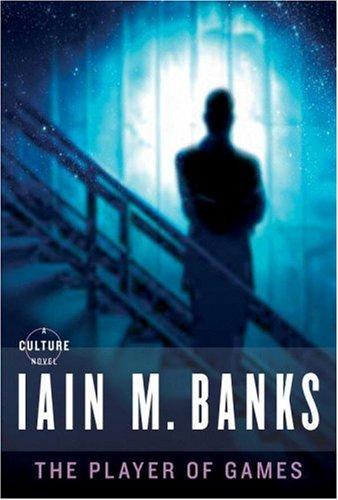
Talk to The Player of Games like its author wrote you back.
Get the ideas that fit your life — not generic summaries.
- Chat with the book
- Audiobook-style main ideas
- Adapts to your life and goals
- Helps you take action
What it argues
Jernau Gurgeh is the greatest game player in the Culture — an interstellar post-scarcity civilization governed by benevolent AIs called Minds. Gurgeh has mastered every game worth mastering and finds himself curiously empty, a condition that makes him vulnerable when Special Circumstances, the Culture's intelligence service, offers him something unprecedented: a chance to travel to the Azadian Empire and play Azad. Azad is not just a game. It is the mechanism by which the Empire determines its Emperor, its power structures, and its entire social order. The best player rules. Gurgeh, who has never played anything but games, is about to discover that some games are the civilization.
Banks is doing several things at once in this compact novel. At the surface level it's a tournament narrative — Gurgeh learning Azad, advancing through rounds, facing increasingly brutal opponents. Below that it's a political allegory: the Azadian Empire is a thinly coded critique of hierarchical, violent, patriarchal civilization, and the game mirrors it perfectly. The game rewards brutality, enforces status, and eliminates mercy. That a Culture citizen who has lived inside a post-scarcity utopia must descend into this world to compete reveals something about how the Culture itself maintains its position.
What it gets right
- 1.
Azad is the novel's central metaphor: a game so complex it mirrors the civilization that built it, meaning to win the game is to master the civilization's logic — including its brutality.
- 2.
Gurgeh's emptiness at the novel's opening is load-bearing. A post-scarcity citizen who has everything and feels nothing is precisely the kind of person who can be recruited for purposes he doesn't fully understand.
- 3.
Special Circumstances operates through manipulation rather than force — it's the Culture's intelligence arm, and its methods are morally different from the Empire's methods only in degree.
What it covers
Who wrote it
Iain M. Banks (1954–2013) was a Scottish novelist who wrote literary fiction as Iain Banks and science fiction as Iain M. Banks. His Culture series — ten novels set in a post-scarcity interstellar civilization managed by benevolent AIs — is among the most celebrated space opera sequences in English. Other major works include The Wasp Factory, Complicity, and The Crow Road under his literary name. He was known for political engagement, structural invention, and a dark wit that ran through both his SF and his literary fiction. He died of cancer in 2013 and announced his diagnosis publicly only months before his death.
