Science · Book club
The Pleasure of Finding Things Out book club questions
Here are 12 book club questions for The Pleasure of Finding Things Out by Richard P. Feynman, ordered to open easily and end somewhere worth arguing about. Copy them, print them, or bring them up one at a time.
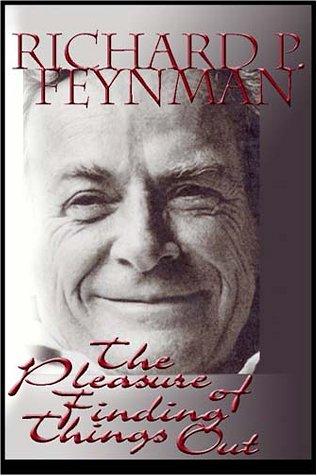
Richard Feynman died in 1988, but he gave talks, interviews, and lectures throughout his career that were preserved in recordings and transcripts.
Richard P. Feynman · 1999 · 5h 45m
Full summary and key takeaways →The 12 questions
- 1.
Feynman describes his father teaching him to observe and question rather than memorize names. How did your own early education handle the difference between naming things and understanding them?
- 2.
Feynman says doubt is a virtue. Where in your own professional or personal life do you treat doubt as productive rather than as a failure to commit?
- 3.
What's an example from your own field of cargo cult science or practice — something that has the forms of rigor without the substance?
- 4.
Feynman believed scientific understanding enriches experience. Is there an area of your life where knowing more about how something works has made you enjoy it more?
- 5.
His minority report on Challenger blamed organizational culture as much as technical failure. Does that framing apply to a failure you've witnessed?
- 6.
Feynman was openly uncomfortable with people using his name or fame to lend authority to claims. How do you navigate arguments from authority in your own reading and conversations?
- 7.
The book is a collection rather than a single argument. Does that format feel satisfying, or do you find it frustrating that Feynman's ideas aren't developed more systematically?
- 8.
Feynman says science doesn't tell us what we ought to do, only what is the case. Do you agree that the ought/is distinction is that clean?
- 9.
He describes being able to sit with an open question without anxiety — to not know and be comfortable not knowing. Is that a trainable skill, or is it more like a temperament?
- 10.
What is the 'pleasure of finding things out' in your own life? When do you experience something like what Feynman describes?
- 11.
Feynman was a showman as well as a scientist. How much of this collection's appeal do you think is the ideas, and how much is the performance of the ideas?
- 12.
Many scientists of Feynman's generation wrote popular books or gave public lectures. How does the relationship between science and the public feel different today?
How to run the discussion
- Pick six to eight, not all of them. An hour of real discussion covers fewer questions than anyone expects, and racing the list is what makes a book club feel like homework.
- Open with what people noticed, not what they concluded. Asking for a verdict first hardens opinions before anyone has heard each other.
- Let the disagreement run. The questions below that split a room are the ones worth the time; the ones everyone answers the same way can be skipped.
- Ask the quiet person a specific question. A direct, narrow question is far easier to answer than an open invitation to contribute.
Themes worth steering toward
If the conversation stalls, these are the threads that usually restart it.
Common questions
What are good book club questions for The Pleasure of Finding Things Out?
Here are 12 book club questions for The Pleasure of Finding Things Out by Richard P. Feynman, ordered to open easily and end somewhere worth arguing about. The strongest openers ask what each reader noticed rather than what they concluded, and the discussion usually turns on scientific curiosity, physics, education.
How long should a book club discussion of The Pleasure of Finding Things Out last?
Most groups run 60 to 90 minutes of actual discussion. That is roughly six to eight questions, not all of them, so pick the ones that suit your group rather than working down the list in order.
What are the main themes in The Pleasure of Finding Things Out?
Scientific curiosity, Physics, Education, Doubt, Wonder. Those are the threads most likely to divide a room, which makes them the useful places to steer a discussion that has gone quiet.
Picking the next one? See books like The Pleasure of Finding Things Out or questions for other book club picks.
