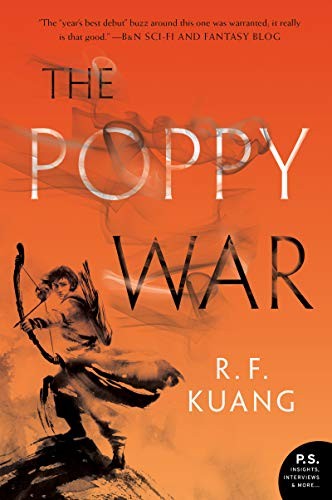
Talk to The Poppy War like its author wrote you back.
Get the ideas that fit your life — not generic summaries.
- Chat with the book
- Audiobook-style main ideas
- Adapts to your life and goals
- Helps you take action
The Poppy War, in detail
Rin is a war orphan from a poor southern province who claws her way into Sinegard, the empire's elite military academy, by acing an exam she was never supposed to pass. The Poppy War begins as a school story — brutal, competitive, stratified by class and ethnicity — but the genre shifts mid-novel as the Mugen Federation invades and the story becomes something far darker. Kuang, drawing heavily on twentieth-century Chinese history including the Second Sino-Japanese War and the Nanjing Massacre, uses fantasy not to soften that history but to metabolize it.
The book is really about what war does to people, specifically what it asks of them. Rin discovers she can channel a god — a fire deity associated with destruction — and the novel treats this power not as triumphant but as corrosive. The question isn't whether she can win but whether winning at the cost of what it requires is survivable. The shamanism system is intertwined with opium use and psychological fracture, which is not a coincidence. Kuang is drawing a line between colonialism, the opium trade, and the trauma passed down through generations.
The prose is blunt and precise; there is no pleasure in the violence. The third act is graphic and deliberately difficult to read. Kuang has said she wanted to force Western readers to sit with atrocities they routinely sanitize when they are distant or Asian. The structural choice — school story to war epic to horror — is intentional and the tonal whiplash is the point. This is not grimdark for atmosphere. It is grimdark because the history it is based on was actually like this.
Readers who want clean heroics, redemption arcs, or measured pacing will not find them here. Readers willing to have a fantasy novel make them genuinely uncomfortable, who want genre fiction that carries actual historical weight, will find The Poppy War among the most ambitious debuts of the past decade. The sequels, The Dragon Republic and The Burning God, complete the trilogy and remain consistent in their brutality and ambition.
The big ideas
- 1.
Fantasy can carry the full weight of real atrocity — Kuang refuses the genre's usual tendency to aestheticize suffering and forces the horror to land.
- 2.
Rin's power is inseparable from trauma and addiction; divine fire in this world doesn't elevate the hero, it hollows them out.
- 3.
The school-story opening is a deliberate setup: the competence and ambition cultivated at Sinegard are exactly what makes Rin capable of the book's worst acts.
