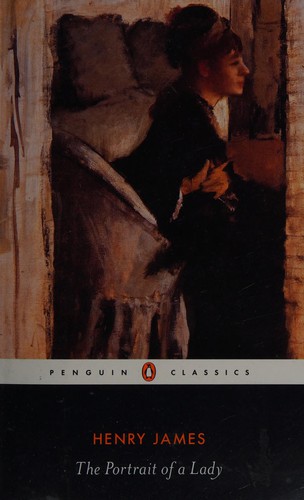
Talk to The Portrait of a Lady like its author wrote you back.
Get the ideas that fit your life — not generic summaries.
- Chat with the book
- Audiobook-style main ideas
- Adapts to your life and goals
- Helps you take action
What it argues
Isabel Archer is an intelligent, independent young American woman who arrives in Europe convinced that she wants nothing more than to be free — free from convention, from the pressure to marry, from the enclosures that other women seem to accept without complaint. When a dying cousin arranges for her to inherit a fortune, that freedom becomes a concrete fact. What she does with it forms the spine of one of the most psychologically intricate novels in the English language.
James is not interested in plot in any conventional sense. The Portrait of a Lady is about interiority — the texture of how a particular mind understands itself, misreads others, and collides with experience. Isabel's central mistake is choosing Gilbert Osmond, a cultivated aesthete whose contempt for the world she mistakes for superior detachment. The mechanics of that mistake, and what Isabel does once she understands it, are the novel's real subject. Osmond and his accomplice Madame Merle represent a kind of deliberate social evil: they want Isabel's money, and they acquire it through studied manipulation of her own best qualities — her idealism, her pride, her desire to be free.
What it gets right
- 1.
Freedom from constraint is not the same as freedom to build a good life — Isabel has both money and independence and still manages to imprison herself.
- 2.
James shows evil as cultivated, patient, and domestic: Osmond and Merle are not melodramatic villains but people who weaponize taste and social form.
- 3.
The novel's most important event — Isabel sitting by the fire reviewing her marriage — happens entirely inside her head, with no external action at all.
What it covers
Who wrote it
Henry James (1843–1916) was an American-born writer who spent most of his adult life in Europe and became a British citizen in 1915. He is considered one of the founders of literary realism and a key precursor to modernism. His major novels include The Wings of the Dove, The Ambassadors, and The Golden Bowl, along with The Turn of the Screw and Washington Square. He was nominated for the Nobel Prize in Literature three times. His late-period style, characterized by extreme syntactic elaboration and psychological subtlety, remains among the most demanding and rewarding in the English canon.
