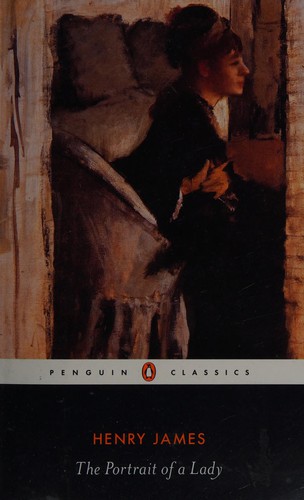
The Portrait of a Lady by Henry James is a 1881 literary fiction book about freedom and constraint, marriage as trap, american innocence abroad. Freedom from constraint is not the same as freedom to build a good life — Isabel has both money and independence and still manages to imprison herself.
Summary
Isabel Archer is an intelligent, independent young American woman who arrives in Europe convinced that she wants nothing more than to be free — free from convention, from the pressure to marry, from the enclosures that other women seem to accept without complaint. When a dying cousin arranges for her to inherit a fortune, that freedom becomes a concrete fact. What she does with it forms the spine of one of the most psychologically intricate novels in the English language.
James is not interested in plot in any conventional sense. The Portrait of a Lady is about interiority — the texture of how a particular mind understands itself, misreads others, and collides with experience. Isabel's central mistake is choosing Gilbert Osmond, a cultivated aesthete whose contempt for the world she mistakes for superior detachment. The mechanics of that mistake, and what Isabel does once she understands it, are the novel's real subject. Osmond and his accomplice Madame Merle represent a kind of deliberate social evil: they want Isabel's money, and they acquire it through studied manipulation of her own best qualities — her idealism, her pride, her desire to be free.
James invented a technique here that he would develop further in his later work: the "central consciousness," in which the reader experiences everything through a single character's perceptions, always uncertain whether that perception is accurate. The famous chapter where Isabel sits by the fire all night and reviews her life is a foundational moment in literary modernism. It's not dramatic by the standards of Victorian fiction; nothing happens. A woman thinks. James makes it devastating.
This is not a fast or an easy novel. The middle third, in particular, demands patience — long conversations in which enormous things happen in the subtext while the surface remains perfectly polished. Readers who want a pacey story will bounce off it. But for those who find psychological complexity more interesting than external action, The Portrait of a Lady rewards close attention. It's also one of the clearest treatments in any literature of what it means to choose badly when you had every advantage, and then to live with it.
Talk to The Portrait of a Lady like its author wrote you back.
Get the ideas that fit your life — not generic summaries.
- Chat with the book
- Audiobook-style main ideas
- Adapts to your life and goals
- Helps you take action
Key takeaways
- 1.
Freedom from constraint is not the same as freedom to build a good life — Isabel has both money and independence and still manages to imprison herself.
- 2.
James shows evil as cultivated, patient, and domestic: Osmond and Merle are not melodramatic villains but people who weaponize taste and social form.
- 3.
The novel's most important event — Isabel sitting by the fire reviewing her marriage — happens entirely inside her head, with no external action at all.
- 4.
The 'central consciousness' technique means the reader is always limited by what Isabel understands, which is itself part of the point: she sees brilliantly and still misses key things.
- 5.
Isabel's pride is both her best quality and the thing that makes her most manipulable; she is flattered precisely where she is most vulnerable.
- 6.
The ending refuses the satisfactions of either rescue or revenge — James was not writing a morality tale or a romance.
- 7.
Europe in the novel is not civilization but a sophisticated trap for American idealism; Osmond embodies a European refinement that has curdled into sterility.
- 8.
The question of whether Isabel should have left Osmond is never resolved — James asks it but refuses to answer it for us.
Discussion questions
Use these on your own, with a book club, or as chat starters in Superbook. Book club version, ready to copy or print →
- 1.
Isabel turns down two solid proposals before accepting Osmond. What does James think she was actually looking for in a husband?
- 2.
Madame Merle tells Isabel that we are each made up of our house, our furniture, our clothes. Isabel objects. Who is right, and does the novel settle the question?
- 3.
Ralph Touchett arranges Isabel's inheritance because he wants to watch what she does with freedom. Is that a kindness or a cruelty?
- 4.
Isabel discovers the truth about Osmond and Merle's relationship before the midpoint. She stays anyway. What is James saying about the psychology of people who stay in bad marriages?
- 5.
Osmond is presented as purely evil by the end, but James gives him real intelligence and a coherent worldview. Does the novel earn that portrayal, or does it tip into melodrama?
- 6.
The ending — Isabel returning to Rome — has divided readers for 140 years. What do you think she decided, and why does James refuse to tell us directly?
- 7.
Henrietta Stackpole, the American journalist, is comic relief but also the only character who says exactly what she thinks. What does her presence mean to the novel?
- 8.
James revised the novel heavily in 1908 for the New York Edition, making the prose denser and more convoluted. Does difficulty of style feel like an obstacle here or an enhancement?
- 9.
Compared to Edith Wharton's treatment of similar material in The Age of Innocence, where does James place the blame for Isabel's fate — on society, on Osmond, or on Isabel herself?
- 10.
The novel is called a 'portrait.' What kind of portrait is it — sympathetic, critical, clinical? Does James like Isabel?
- 11.
Caspar Goodwood's final scene is one of the most physically charged passages in Victorian fiction. What does it mean that Isabel runs from him?
- 12.
Isabel believes her choices are entirely free. The novel suggests otherwise. What are the forces — internal and external — that actually constrain her?
Themes
Frequently asked questions
-
Is The Portrait of a Lady worth reading?
Yes, if you're willing to read slowly and accept that the biggest events in the novel are interior. James is tracking the movement of a mind, not the movement of a plot. Readers who give it patience consistently rank it among the greatest novels in English.
-
Is The Portrait of a Lady hard to read?
The early chapters are accessible by James's standards. The difficulty increases in the middle, especially in scenes of social conversation where everything that matters is subtext. The 1908 revised edition is denser than the 1881 original; most modern editions use the 1881 text, which is easier.
-
What is the novel about without spoilers?
A young American woman inherits a fortune in Europe and has to decide what to do with her freedom. The novel follows her choices and their consequences across about four years.
-
Why is it considered a classic?
It essentially invented the psychological novel as we know it — the technique of rendering a character's inner life in sustained, precise detail rather than summarizing it from outside. The scene where Isabel thinks through her marriage alone at night is still taught as a turning point in literary history.
-
Is there a film adaptation?
Yes — Jane Campion directed a 1996 adaptation with Nicole Kidman as Isabel and John Malkovich as Osmond. It is stylistically adventurous and reasonably faithful to the novel's psychological core, though the ending diverges somewhat.
-
Who shouldn't read this book?
Readers who need narrative momentum to stay engaged. James is not writing suspense. He is writing about a woman thinking, and if that doesn't hold your attention on its own terms, the book will feel interminable.