Talk to The Power Law like its author wrote you back.
Get the ideas that fit your life — not generic summaries.
- Chat with the book
- Audiobook-style main ideas
- Adapts to your life and goals
- Helps you take action
What it argues
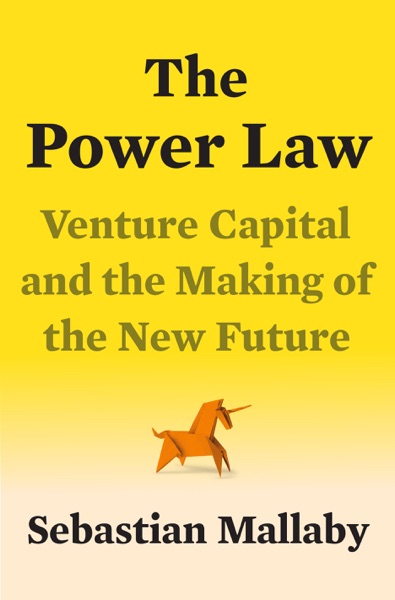
The Power Law is Sebastian Mallaby's history of venture capital, told through the people who built the industry from its roots in postwar military research to its current position as the primary financing mechanism for technology startups worldwide. Mallaby is a seasoned financial journalist and the author of acclaimed books on hedge funds and the Greenspan era; he brings the same research depth to venture capital, conducting hundreds of interviews with figures including John Doerr, Mike Moritz, Peter Thiel, and the founders of Sequoia and Kleiner Perkins.
The title refers to the statistical distribution that defines venture investing: returns are not normally distributed, where most investments cluster around the mean. Instead they follow a power law, where a tiny fraction of investments produce the vast majority of returns. One investment in a portfolio can return more than the entire rest combined. This isn't just a feature of VC economics; Mallaby argues it's the correct framework for understanding the tech industry itself. A small number of companies—Google, Amazon, Facebook—have captured an outsized share of value, and the venture model evolved in response to that reality, not the other way around.
What it gets right
- 1.
Venture returns follow a power law, not a bell curve. The correct strategy isn't diversification for average returns; it's concentration on the handful of investments with extreme upside potential.
- 2.
The best VCs don't just provide capital. They provide networks, operational expertise, and pattern recognition from watching hundreds of companies build and fail.
- 3.
The partnership model that defines most VC firms creates its own pathologies: decisions made by consensus tend toward incrementalism rather than the contrarian bets that produce outlier returns.
What it covers
Who wrote it
Sebastian Mallaby is a senior fellow at the Council on Foreign Relations and a contributing columnist at the Washington Post. Born in the United Kingdom, he spent years as a journalist at The Economist before moving to the US. His previous books include More Money Than God, a history of hedge funds, and The Man Who Knew, a biography of Alan Greenspan. The Power Law, published in 2022, drew on several years of access to major venture capital firms and hundreds of interviews with investors and founders. It won the Financial Times and McKinsey Business Book of the Year award.
