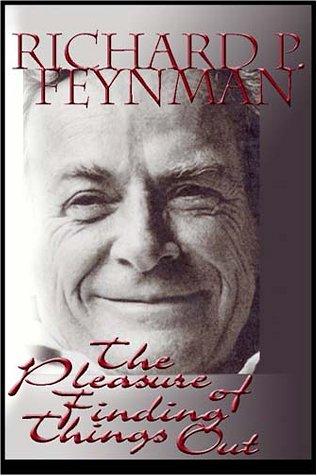
Talk to The Pleasure of Finding Things Out like its author wrote you back.
Get the ideas that fit your life — not generic summaries.
- Chat with the book
- Audiobook-style main ideas
- Adapts to your life and goals
- Helps you take action
What it argues
Richard Feynman died in 1988, but he gave talks, interviews, and lectures throughout his career that were preserved in recordings and transcripts. This collection, assembled and edited after his death, brings together some of the best of that material: a BBC interview from 1981, lectures on science education and uncertainty, his minority report on the Space Shuttle Challenger disaster, conversations on computers and the future of science, and several shorter pieces on topics ranging from cargo cult science to the relationship between science and religion.
The collection is less polished than Feynman's own books and doesn't build a single argument. What it delivers instead is Feynman's voice, repeatedly, across a range of subjects. And that voice is one of the most recognizable in 20th-century science: plainspoken, theatrical, insistent on concrete understanding over abstract formality, allergic to pretension, and capable of making the structure of an atom or the nature of scientific doubt feel genuinely exciting to a general audience.
What it gets right
- 1.
Scientific knowledge gives you a deeper, richer experience of the world, not a diminished one. Understanding why the sky is blue doesn't make sunsets less beautiful — it adds a layer of meaning.
- 2.
Doubt is the engine of science. The willingness to hold beliefs tentatively and update them on evidence is not a weakness; it's the source of science's reliability.
- 3.
Feynman distinguishes knowing the name of something from knowing something. Names are social; understanding is structural. The two are frequently confused.
What it covers
Who wrote it
Richard P. Feynman (1918–1988) was an American theoretical physicist who received the Nobel Prize in Physics in 1965 for his work on quantum electrodynamics. He worked on the Manhattan Project at Los Alamos, developed the Feynman diagram as a tool for particle physics, and spent most of his career at Caltech. He was celebrated as a teacher and science communicator and wrote several books including QED, The Feynman Lectures on Physics, and Surely You're Joking, Mr. Feynman. He died of kidney cancer in 1988.
