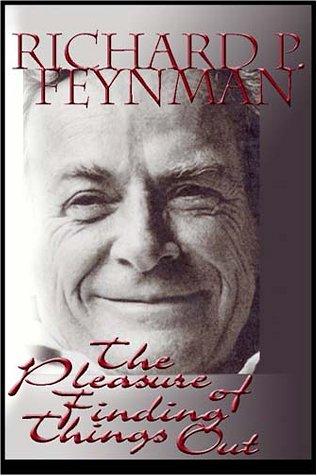
The Pleasure of Finding Things Out by Richard P. Feynman is a 1999 science book about scientific curiosity, physics, education. Scientific knowledge gives you a deeper, richer experience of the world, not a diminished one. Understanding why the sky is blue doesn't make sunsets less beautiful — it adds a layer of meaning.
Summary
Richard Feynman died in 1988, but he gave talks, interviews, and lectures throughout his career that were preserved in recordings and transcripts. This collection, assembled and edited after his death, brings together some of the best of that material: a BBC interview from 1981, lectures on science education and uncertainty, his minority report on the Space Shuttle Challenger disaster, conversations on computers and the future of science, and several shorter pieces on topics ranging from cargo cult science to the relationship between science and religion.
The collection is less polished than Feynman's own books and doesn't build a single argument. What it delivers instead is Feynman's voice, repeatedly, across a range of subjects. And that voice is one of the most recognizable in 20th-century science: plainspoken, theatrical, insistent on concrete understanding over abstract formality, allergic to pretension, and capable of making the structure of an atom or the nature of scientific doubt feel genuinely exciting to a general audience.
The central theme, if there is one, is the value of not knowing. Feynman returns throughout to the importance of uncertainty, of being comfortable with open questions, and of the distinction between knowing the name of something and understanding it. His famous account of his father's lessons — the elder Feynman teaching his son to observe rather than to categorize, to ask why rather than to accept the given name — is one of the most quoted passages in science writing, and it is here in its original context.
Some pieces are stronger than others. The lecture on the Challenger disaster is historically important but reads more like an engineering report than a scientific essay. The pieces on science education are occasionally didactic. But the BBC interview, in which Feynman ranges freely across his life, his physics, and his philosophy of curiosity, is worth the price of the collection. It's the kind of thing that makes readers want to think more carefully, and that is an effect Feynman could produce reliably and without any apparent effort.
Talk to The Pleasure of Finding Things Out like its author wrote you back.
Get the ideas that fit your life — not generic summaries.
- Chat with the book
- Audiobook-style main ideas
- Adapts to your life and goals
- Helps you take action
Key takeaways
- 1.
Scientific knowledge gives you a deeper, richer experience of the world, not a diminished one. Understanding why the sky is blue doesn't make sunsets less beautiful — it adds a layer of meaning.
- 2.
Doubt is the engine of science. The willingness to hold beliefs tentatively and update them on evidence is not a weakness; it's the source of science's reliability.
- 3.
Feynman distinguishes knowing the name of something from knowing something. Names are social; understanding is structural. The two are frequently confused.
- 4.
Cargo cult science — producing the external forms of scientific research (citations, technical vocabulary, experimental protocols) without the substance — was Feynman's term for work that looks like science but isn't.
- 5.
His father's pedagogical approach — encouraging observation and questioning rather than categorization and label-memorization — influenced how Feynman taught and how he thought about what education should do.
- 6.
Science and religion address different questions. Feynman was agnostic and careful about this: he thought science couldn't answer the question of what we ought to do, only what is the case.
- 7.
In his Challenger report, Feynman concluded that NASA's management had allowed organizational optimism to override engineering evidence. The bureaucratic failure was at least as important as the technical one.
- 8.
Pleasure — genuine delight in figuring things out — is both the motivation for scientific work and evidence that you're doing it right. When the curiosity stops, something has gone wrong.
Discussion questions
Use these on your own, with a book club, or as chat starters in Superbook.
- 1.
Feynman describes his father teaching him to observe and question rather than memorize names. How did your own early education handle the difference between naming things and understanding them?
- 2.
Feynman says doubt is a virtue. Where in your own professional or personal life do you treat doubt as productive rather than as a failure to commit?
- 3.
What's an example from your own field of cargo cult science or practice — something that has the forms of rigor without the substance?
- 4.
Feynman believed scientific understanding enriches experience. Is there an area of your life where knowing more about how something works has made you enjoy it more?
- 5.
His minority report on Challenger blamed organizational culture as much as technical failure. Does that framing apply to a failure you've witnessed?
- 6.
Feynman was openly uncomfortable with people using his name or fame to lend authority to claims. How do you navigate arguments from authority in your own reading and conversations?
- 7.
The book is a collection rather than a single argument. Does that format feel satisfying, or do you find it frustrating that Feynman's ideas aren't developed more systematically?
- 8.
Feynman says science doesn't tell us what we ought to do, only what is the case. Do you agree that the ought/is distinction is that clean?
- 9.
He describes being able to sit with an open question without anxiety — to not know and be comfortable not knowing. Is that a trainable skill, or is it more like a temperament?
- 10.
What is the 'pleasure of finding things out' in your own life? When do you experience something like what Feynman describes?
- 11.
Feynman was a showman as well as a scientist. How much of this collection's appeal do you think is the ideas, and how much is the performance of the ideas?
- 12.
Many scientists of Feynman's generation wrote popular books or gave public lectures. How does the relationship between science and the public feel different today?
Themes
Frequently asked questions
-
Is The Pleasure of Finding Things Out worth reading?
Yes, especially if you haven't encountered Feynman's voice before. The collection is uneven — some pieces are stronger than others — but the BBC interview alone is worth the read. It's the most accessible entry point to Feynman's thinking for readers who haven't read his longer books.
-
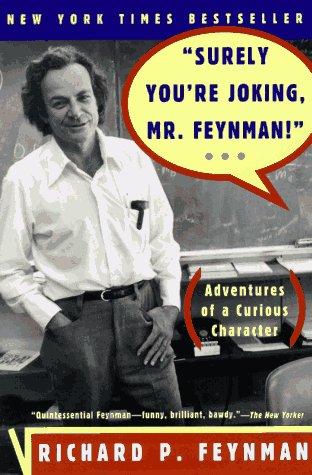
How does this compare to Surely You're Joking, Mr. Feynman?
Surely You're Joking is a memoir with narrative structure and is more entertaining as a read. The Pleasure of Finding Things Out is more reflective and philosophical. Surely You're Joking is the better starting point; this collection rewards readers who want to go deeper into how Feynman thought about science and education.
-
What is cargo cult science?
Feynman's term for research or practice that mimics the external appearance of scientific work — proper methodology, peer review, citations — without honest self-criticism. He coined the phrase in his 1974 Caltech commencement address, which appears in this collection.
-
What does Feynman say about science and religion in this book?
He is careful and non-combative. He distinguishes what science can answer (factual questions about the world) from what it cannot (questions about value and meaning). He does not argue that science disproves religion; he argues that they address different questions, and that a scientifically trained person must maintain uncertainty about the religious ones.
-
Who should read this book?
Readers interested in science, education, and the philosophy of knowledge — especially those who want to understand what scientific thinking actually looks like from the inside. It's also good for educators thinking about how to teach curiosity rather than just content.