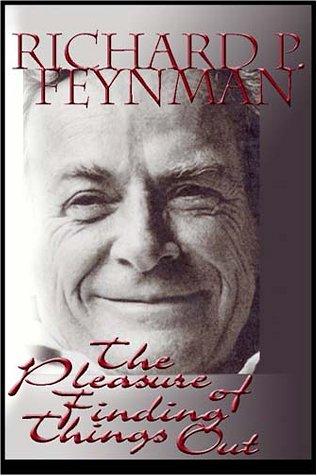
Talk to The Pleasure of Finding Things Out like its author wrote you back.
Get the ideas that fit your life — not generic summaries.
- Chat with the book
- Audiobook-style main ideas
- Adapts to your life and goals
- Helps you take action
The Pleasure of Finding Things Out, in detail
Richard Feynman died in 1988, but he gave talks, interviews, and lectures throughout his career that were preserved in recordings and transcripts. This collection, assembled and edited after his death, brings together some of the best of that material: a BBC interview from 1981, lectures on science education and uncertainty, his minority report on the Space Shuttle Challenger disaster, conversations on computers and the future of science, and several shorter pieces on topics ranging from cargo cult science to the relationship between science and religion.
The collection is less polished than Feynman's own books and doesn't build a single argument. What it delivers instead is Feynman's voice, repeatedly, across a range of subjects. And that voice is one of the most recognizable in 20th-century science: plainspoken, theatrical, insistent on concrete understanding over abstract formality, allergic to pretension, and capable of making the structure of an atom or the nature of scientific doubt feel genuinely exciting to a general audience.
The central theme, if there is one, is the value of not knowing. Feynman returns throughout to the importance of uncertainty, of being comfortable with open questions, and of the distinction between knowing the name of something and understanding it. His famous account of his father's lessons — the elder Feynman teaching his son to observe rather than to categorize, to ask why rather than to accept the given name — is one of the most quoted passages in science writing, and it is here in its original context.
Some pieces are stronger than others. The lecture on the Challenger disaster is historically important but reads more like an engineering report than a scientific essay. The pieces on science education are occasionally didactic. But the BBC interview, in which Feynman ranges freely across his life, his physics, and his philosophy of curiosity, is worth the price of the collection. It's the kind of thing that makes readers want to think more carefully, and that is an effect Feynman could produce reliably and without any apparent effort.
The big ideas
- 1.
Scientific knowledge gives you a deeper, richer experience of the world, not a diminished one. Understanding why the sky is blue doesn't make sunsets less beautiful — it adds a layer of meaning.
- 2.
Doubt is the engine of science. The willingness to hold beliefs tentatively and update them on evidence is not a weakness; it's the source of science's reliability.
- 3.
Feynman distinguishes knowing the name of something from knowing something. Names are social; understanding is structural. The two are frequently confused.
