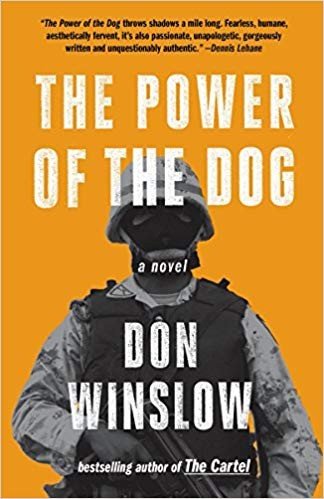
Talk to The Power of the Dog like its author wrote you back.
Get the ideas that fit your life — not generic summaries.
- Chat with the book
- Audiobook-style main ideas
- Adapts to your life and goals
- Helps you take action
What it argues
The Power of the Dog is Don Winslow's epic of the American drug war, covering roughly three decades from the 1970s to the early 2000s and tracing the rise of the Sinaloa cartel through the lives of a DEA agent, a priest, a hitman, a cartel boss, and several other figures whose fates are bound together by money, faith, violence, and the specific kind of corruption that a war without exit produces. It is one of the most ambitious American crime novels of the past thirty years.
The book operates at several registers simultaneously. It is a procedural, tracking how drug trafficking organizations are built, how they corrupt institutions, and how the DEA, CIA, and Mexican police have fought them, collaborated with them, and been remade by them. It is a character study, following Art Keller — Winslow's DEA protagonist — as he watches the war he has fought for decades produce nothing but different configurations of the same violence. And it is a moral argument, sustained across 600 pages, about what the drug war is actually for and who it serves.
What it gets right
- 1.
The drug war is not a war that can be won — it is a set of institutional arrangements that generate profits for multiple parties, including the parties nominally fighting it.
- 2.
Art Keller's tragedy is not that he loses. It is that he wins repeatedly and the situation becomes no better, because the structure that creates the problem remains intact.
- 3.
The Sinaloa cartel is depicted as a business, not a criminal aberration. It responds to market pressure, bureaucratic logic, and institutional incentives the way any organization does.
What it covers
Who wrote it
Don Winslow is an American author and former private investigator born in 1953, best known for the Cartel Trilogy — The Power of the Dog, The Cartel, and The Border — and the Quinn series. His novels frequently engage with the drug war, organized crime, and American political corruption. The Power of the Dog is widely considered one of the defining American crime novels of the twenty-first century. Winslow announced his retirement from fiction writing in 2023 to focus on political activism, though he has since continued to write.
