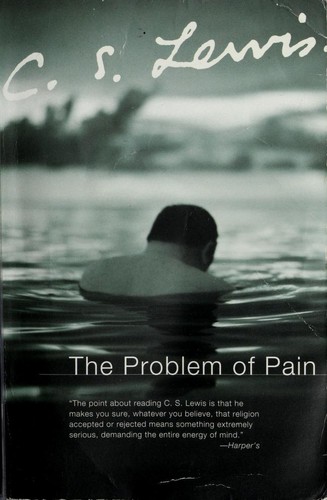
Talk to The Problem of Pain like its author wrote you back.
Get the ideas that fit your life — not generic summaries.
- Chat with the book
- Audiobook-style main ideas
- Adapts to your life and goals
- Helps you take action
What it argues
The Problem of Pain is Lewis's systematic attempt to answer one of the oldest and most persistent objections to theism: if God is good and all-powerful, why does pain exist? Lewis was forty-one and newly converted when he wrote it, and the book has the intellectual confidence of someone who has recently thought his way through a big question. He knew its limits — when his wife died of cancer two decades later, he wrote A Grief Observed, a raw meditation in which the neat answers of The Problem of Pain felt inadequate. But the earlier book remains one of the clearest attempts to construct a theodicy in plain English.
Lewis's central move is to distinguish what we mean by "good" when we call God good. He argues that our instinct to want a God who keeps us comfortable is a confusion: divine goodness is not kindness in the sentimental sense, but something more demanding. A parent who loves a child does not simply give the child whatever makes them feel good in the moment; real love sometimes requires allowing or even causing pain for a greater purpose. Lewis uses the surgeon analogy repeatedly — pain is not God's incompetence but sometimes God's instrument.
What it gets right
- 1.
Divine goodness is not the same as divine kindness in the sentimental sense. A God who loves you may allow or cause pain in the way a surgeon or a good parent does.
- 2.
Much human suffering follows from free will. A world without the capacity for moral evil would be a world without genuine moral agents — a limitation Lewis argues God had reason to avoid.
- 3.
Pain can function as God's megaphone: when comfort lulls us into self-sufficiency, suffering may be the mechanism that opens us to what is beyond ourselves.
What it covers
Who wrote it
C. S. Lewis (1898–1963) was a British literary scholar and Christian apologist who held chairs at both Oxford and Cambridge. Born in Belfast, he became a convinced atheist in his teens and returned to Christianity in his early thirties after sustained conversations with his friend J. R. R. Tolkien. He wrote across genres: The Chronicles of Narnia, the Space Trilogy, academic literary criticism, and a substantial body of apologetics including Mere Christianity, Miracles, and The Screwtape Letters. The Problem of Pain was his first work of apologetics, written shortly after his conversion.
