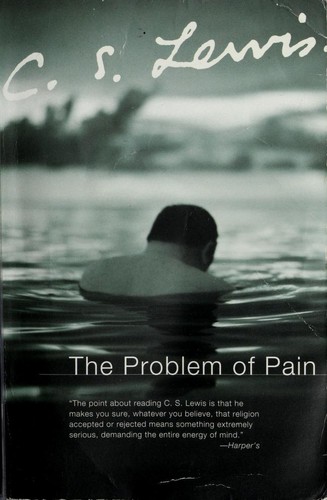
Talk to The Problem of Pain like its author wrote you back.
Get the ideas that fit your life — not generic summaries.
- Chat with the book
- Audiobook-style main ideas
- Adapts to your life and goals
- Helps you take action
The Problem of Pain, in detail
The Problem of Pain is Lewis's systematic attempt to answer one of the oldest and most persistent objections to theism: if God is good and all-powerful, why does pain exist? Lewis was forty-one and newly converted when he wrote it, and the book has the intellectual confidence of someone who has recently thought his way through a big question. He knew its limits — when his wife died of cancer two decades later, he wrote A Grief Observed, a raw meditation in which the neat answers of The Problem of Pain felt inadequate. But the earlier book remains one of the clearest attempts to construct a theodicy in plain English.
Lewis's central move is to distinguish what we mean by "good" when we call God good. He argues that our instinct to want a God who keeps us comfortable is a confusion: divine goodness is not kindness in the sentimental sense, but something more demanding. A parent who loves a child does not simply give the child whatever makes them feel good in the moment; real love sometimes requires allowing or even causing pain for a greater purpose. Lewis uses the surgeon analogy repeatedly — pain is not God's incompetence but sometimes God's instrument.
He addresses human free will as the explanation for much human-caused suffering, arguing that a world without the capacity for genuine evil would also be a world without genuine moral agents. He also takes up animal pain, acknowledging it as the hardest case for his framework, and gives an answer he himself describes as tentative and speculative. The chapters on hell and heaven close the book: Lewis argues that hell is the logical consequence of freely rejecting what God is, not an external punishment imposed from above.
The Problem of Pain is a short book — under 150 pages — and it moves quickly. Lewis is writing as a Christian apologist, not as a neutral philosopher, and readers who are not at least willing to grant his premises will find his conclusions land differently than he intends. The book works best as an internal critique: given Christian premises, how might one think about suffering? On those terms it is unusually clear and bracingly honest about what the framework can and cannot explain.
The big ideas
- 1.
Divine goodness is not the same as divine kindness in the sentimental sense. A God who loves you may allow or cause pain in the way a surgeon or a good parent does.
- 2.
Much human suffering follows from free will. A world without the capacity for moral evil would be a world without genuine moral agents — a limitation Lewis argues God had reason to avoid.
- 3.
Pain can function as God's megaphone: when comfort lulls us into self-sufficiency, suffering may be the mechanism that opens us to what is beyond ourselves.
