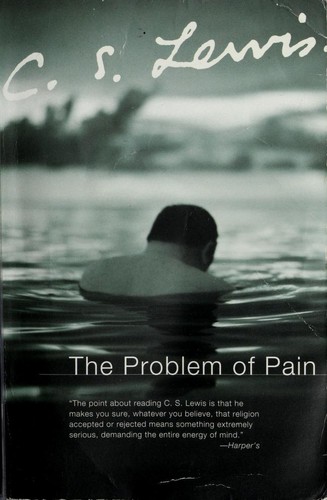
The Problem of Pain by C. S. Lewis is a 1940 philosophy book about suffering, theodicy, faith. Divine goodness is not the same as divine kindness in the sentimental sense. A God who loves you may allow or cause pain in the way a surgeon or a good parent does.
Summary
The Problem of Pain is Lewis's systematic attempt to answer one of the oldest and most persistent objections to theism: if God is good and all-powerful, why does pain exist? Lewis was forty-one and newly converted when he wrote it, and the book has the intellectual confidence of someone who has recently thought his way through a big question. He knew its limits — when his wife died of cancer two decades later, he wrote A Grief Observed, a raw meditation in which the neat answers of The Problem of Pain felt inadequate. But the earlier book remains one of the clearest attempts to construct a theodicy in plain English.
Lewis's central move is to distinguish what we mean by "good" when we call God good. He argues that our instinct to want a God who keeps us comfortable is a confusion: divine goodness is not kindness in the sentimental sense, but something more demanding. A parent who loves a child does not simply give the child whatever makes them feel good in the moment; real love sometimes requires allowing or even causing pain for a greater purpose. Lewis uses the surgeon analogy repeatedly — pain is not God's incompetence but sometimes God's instrument.
He addresses human free will as the explanation for much human-caused suffering, arguing that a world without the capacity for genuine evil would also be a world without genuine moral agents. He also takes up animal pain, acknowledging it as the hardest case for his framework, and gives an answer he himself describes as tentative and speculative. The chapters on hell and heaven close the book: Lewis argues that hell is the logical consequence of freely rejecting what God is, not an external punishment imposed from above.
The Problem of Pain is a short book — under 150 pages — and it moves quickly. Lewis is writing as a Christian apologist, not as a neutral philosopher, and readers who are not at least willing to grant his premises will find his conclusions land differently than he intends. The book works best as an internal critique: given Christian premises, how might one think about suffering? On those terms it is unusually clear and bracingly honest about what the framework can and cannot explain.
Talk to The Problem of Pain like its author wrote you back.
Get the ideas that fit your life — not generic summaries.
- Chat with the book
- Audiobook-style main ideas
- Adapts to your life and goals
- Helps you take action
Key takeaways
- 1.
Divine goodness is not the same as divine kindness in the sentimental sense. A God who loves you may allow or cause pain in the way a surgeon or a good parent does.
- 2.
Much human suffering follows from free will. A world without the capacity for moral evil would be a world without genuine moral agents — a limitation Lewis argues God had reason to avoid.
- 3.
Pain can function as God's megaphone: when comfort lulls us into self-sufficiency, suffering may be the mechanism that opens us to what is beyond ourselves.
- 4.
The concept of tribulation — suffering that shapes character — is central to how Lewis reads human history. God's purpose is not to make humans happy in the short term but to make them good.
- 5.
Animal pain is the hardest case for Christian theodicy, and Lewis acknowledges it openly. His answer involves speculative ideas about animal consciousness that he presents as possibilities, not certainties.
- 6.
Hell, in Lewis's reading, is not a place God sends people as punishment but the logical end of a free choice to reject God. The door to hell is locked from the inside.
- 7.
Heaven, as Lewis describes it, is the full satisfaction of a desire that this world persistently awakens and never fully fulfills. The longing itself is a clue.
- 8.
Self-surrender is the core of the Christian life for Lewis. The problem of pain is partly a problem of the self's resistance to being remade.
Discussion questions
Use these on your own, with a book club, or as chat starters in Superbook. Book club version, ready to copy or print →
- 1.
Lewis distinguishes divine goodness from sentimental kindness. Does that distinction do real philosophical work for you, or does it feel like a redefinition that avoids the original problem?
- 2.
He argues that free will explains much human-caused suffering. What suffering does that explanation leave unexplained, and how does Lewis handle those cases?
- 3.
Lewis uses the surgeon and the parent as analogies for God's relationship to pain. Where do those analogies hold up, and where do they break down?
- 4.
He acknowledges that animal pain is the hardest case. Does his tentative response satisfy you? What would a more adequate answer need to look like?
- 5.
Lewis later wrote A Grief Observed after his wife's death, in which the tidy frameworks of The Problem of Pain felt hollow. What does that sequence tell us about the difference between theodicy in theory and in grief?
- 6.
The claim that hell is locked from the inside — that damnation is the culmination of a free choice — is one of Lewis's most famous ideas. Does it make the concept of hell more or less troubling?
- 7.
Lewis argues that the world is not designed for comfort but for soul-making. Is that a reassuring idea or a disturbing one?
- 8.
He says pain is God's megaphone. Have you experienced suffering that, in retrospect, seemed to open something in you that comfort had closed? How does that experience relate to Lewis's argument?
- 9.
How does The Problem of Pain compare to other theodicies you're aware of? Where is Lewis's account stronger or weaker than alternative approaches?
- 10.
Lewis wrote this book before major personal loss. A Grief Observed, written after, sounds very different. What do you make of that difference?
- 11.
The book is explicitly Christian. Can his argument about the constructive function of suffering be detached from its theological premises and applied more broadly?
- 12.
What is the strongest objection to Lewis's theodicy that he does not fully anticipate?
Themes
Frequently asked questions
-
What is The Problem of Pain about?
It's Lewis's theodicy: his attempt to explain how a good and omnipotent God could permit suffering. He addresses human pain, animal pain, hell, and heaven, arguing that divine goodness is not sentimental kindness and that pain often serves purposes beyond comfort.
-
Is The Problem of Pain still worth reading?
Yes, especially as a model of how to think through theodicy carefully in plain language. Lewis is honest about the limits of his framework, and the book pairs illuminatingly with A Grief Observed, written after his wife's death, when those limits became personal.
-
How long does it take to read The Problem of Pain?
About three hours. At under 150 pages it's one of Lewis's shortest apologetics books. The chapters are dense with argument but the prose is clear and the book moves quickly.
-
Who should read The Problem of Pain?
Christians wrestling with theodicy, skeptics curious about the most articulate version of the Christian response to suffering, and anyone who has experienced significant loss and wants a serious intellectual framework for thinking about what it means.
-
What is Lewis's answer to the problem of pain?
That divine goodness aims at transformation rather than comfort, that free will explains much moral evil, that pain is sometimes a necessary mechanism for growth and self-surrender, and that the full resolution of suffering is found in a destination beyond this life.
Similar books

Mere Christianity
C. S. Lewis

Surprised by Joy: The Shape of My Early Life
C. S. Lewis

Man's Search for Meaning
Viktor E. Frankl
Being Mortal: Medicine and What Matters in the End
Atul Gawande
