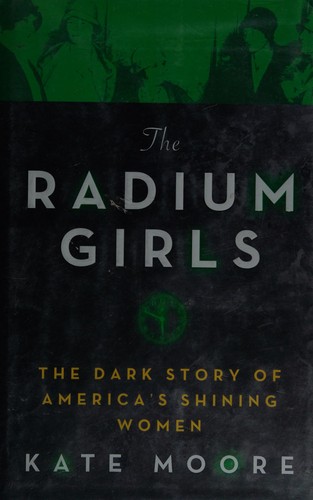
Talk to The Radium Girls: The Dark Story of America's Shining Women like its author wrote you back.
Get the ideas that fit your life — not generic summaries.
- Chat with the book
- Audiobook-style main ideas
- Adapts to your life and goals
- Helps you take action
What it argues
The Radium Girls tells the story of the young women who painted luminous watch dials with radium-based paint in factories in New Jersey and Illinois during the 1910s and 1920s. They were instructed to point their brushes with their lips — a technique known as "lip, dip, paint" — and unknowingly ingested lethal quantities of radium. Kate Moore's book follows the women as they sickened, as their employers denied any connection to the paint, and as a small group of them chose to sue rather than accept the company's story and die quietly.
The science of radium poisoning is documented in clinical detail. The women's bones dissolved. Their jaws had to be removed. Their bodies became so radioactive that, decades after their deaths, their graves emitted measurable radiation. Moore does not soften any of this, and the accumulation of specific medical detail serves a purpose: it makes visceral the gap between what the Radium Corporation knew — or should have known — and what it told its employees.
What it gets right
- 1.
The 'lip, dip, paint' technique was a standard factory instruction, not the workers' own habit. The decision to train workers to ingest radium paint was a deliberate industrial practice.
- 2.
The Radium Corporation's executives handled radium carefully in their own offices while telling workers it was harmless. The knowledge gap was not ignorance — it was institutional dishonesty.
- 3.
Radiation poisoning was poorly understood in the 1910s, but by the early 1920s there was enough evidence linking radium exposure to illness that willful ignorance had become corporate policy.
What it covers
Who wrote it
Kate Moore is a British author and theater director whose work focuses on forgotten chapters of history, particularly those involving women. The Radium Girls, published in 2017, was her first major work of popular history and became a New York Times bestseller. Moore conducted extensive archival research for the book, including access to previously restricted family documents and court records. She has spoken widely about the women's story and its continuing relevance to industrial safety and workers' rights.
