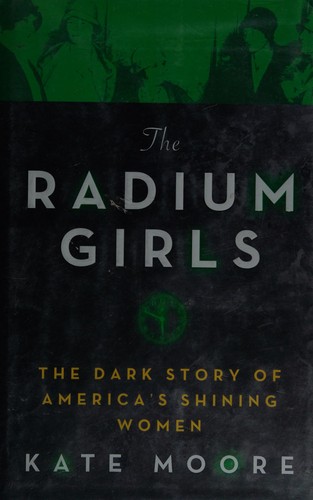
Talk to The Radium Girls: The Dark Story of America's Shining Women like its author wrote you back.
Get the ideas that fit your life — not generic summaries.
- Chat with the book
- Audiobook-style main ideas
- Adapts to your life and goals
- Helps you take action
The Radium Girls: The Dark Story of America's Shining Women, in detail
The Radium Girls tells the story of the young women who painted luminous watch dials with radium-based paint in factories in New Jersey and Illinois during the 1910s and 1920s. They were instructed to point their brushes with their lips — a technique known as "lip, dip, paint" — and unknowingly ingested lethal quantities of radium. Kate Moore's book follows the women as they sickened, as their employers denied any connection to the paint, and as a small group of them chose to sue rather than accept the company's story and die quietly.
The science of radium poisoning is documented in clinical detail. The women's bones dissolved. Their jaws had to be removed. Their bodies became so radioactive that, decades after their deaths, their graves emitted measurable radiation. Moore does not soften any of this, and the accumulation of specific medical detail serves a purpose: it makes visceral the gap between what the Radium Corporation knew — or should have known — and what it told its employees.
The legal fight took years and nearly destroyed the women who pursued it. They were dying during depositions. Lawyers changed sides. Courts delayed. The Radium Corporation spent heavily to discredit the women's claims, funded alternative medical explanations, and relied on the fact that its workers were young, poor, and female in a legal system that had few tools to protect them. Moore's account of the litigation is one of the book's strongest sections — a detailed picture of how corporate power operates against individual plaintiffs with declining health and limited resources.
The women who sued ultimately won settlements and, more importantly, forced changes in labor law and industrial safety standards that protected generations of workers after them. Moore is clear that the victory was partial — the women were already dying — but she frames the legal battle as an act of courage that had real structural consequences. The book is a straightforward exercise in moral clarity: these women were wronged, the company knew it, and the legal system eventually forced accountability, however late.
The big ideas
- 1.
The 'lip, dip, paint' technique was a standard factory instruction, not the workers' own habit. The decision to train workers to ingest radium paint was a deliberate industrial practice.
- 2.
The Radium Corporation's executives handled radium carefully in their own offices while telling workers it was harmless. The knowledge gap was not ignorance — it was institutional dishonesty.
- 3.
Radiation poisoning was poorly understood in the 1910s, but by the early 1920s there was enough evidence linking radium exposure to illness that willful ignorance had become corporate policy.
