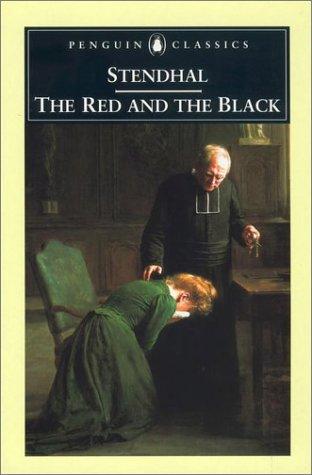
Talk to The Red and the Black like its author wrote you back.
Get the ideas that fit your life — not generic summaries.
- Chat with the book
- Audiobook-style main ideas
- Adapts to your life and goals
- Helps you take action
What it argues
The Red and the Black follows Julien Sorel, the son of a provincial carpenter and the most self-consciously ambitious character in the French novel, as he attempts to rise through the social hierarchy of post-Napoleonic France by any means available to him. The red of the title refers to the Napoleonic army — the path to glory now closed to someone of Julien's birth. The black refers to the clergy — the path that remains. The novel is a psychological study of a young man who treats everything, including love, as a campaign.
Stendhal is fascinated by the gap between Julien's inner life and his public performance. Julien has genuine feeling — real tenderness, real rage, real aesthetic sensitivity — but he has also decided to treat society as an adversary to be outmaneuvered, and this decision corrupts every relationship he forms. His affairs with Madame de Rênal, a married woman of genuine warmth, and with Mathilde de la Mole, an aristocratic young woman who loves him precisely because he is uncontrollable, are the novel's emotional core. Both relationships are portrayed with extreme psychological realism, and Stendhal is equally interested in what Julien does to the women as in what the women do to Julien.
What it gets right
- 1.
Julien Sorel is defined by the contradiction between his genuine intelligence and feeling and his decision to treat all of society as an obstacle course — a choice that ultimately destroys exactly what it was meant to protect.
- 2.
Stendhal's theory of 'crystallization' — the way a person in love projects ideal qualities onto their beloved until reality dissolves the illusion — is demonstrated in both of Julien's major relationships.
- 3.
The 'red' (military) and 'black' (clerical) paths represent the only two viable modes of advancement in post-Napoleonic France for someone without birth, and both require the same fundamental hypocrisy.
What it covers
Who wrote it
Stendhal was the pen name of Marie-Henri Beyle (1783–1842), a French novelist, critic, and civil servant who served in Napoleon's campaigns and spent years in diplomatic posts in Italy. He wrote two major novels — The Red and the Black (1830) and The Charterhouse of Parma (1839) — plus a celebrated study of love, On Love (1822), and an autobiography, The Life of Henry Brulard. He was largely unrecognized in his lifetime but predicted his own posthumous reputation; he wrote that he expected to be read in 1880 or so. He died of an apoplectic stroke on a Paris street at fifty-nine.
