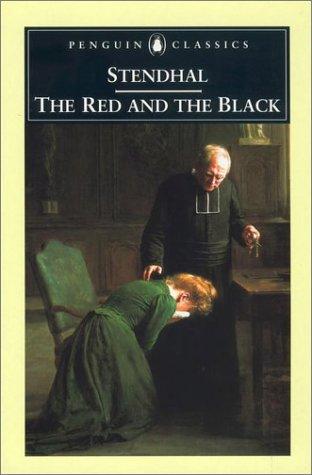
The Red and the Black by Stendhal is a 1830 classics book about ambition and class, hypocrisy and social performance, love and calculation. Julien Sorel is defined by the contradiction between his genuine intelligence and feeling and his decision to treat all of society as an obstacle course — a choice that ultimately destroys exactly what it was meant to protect.
Summary
The Red and the Black follows Julien Sorel, the son of a provincial carpenter and the most self-consciously ambitious character in the French novel, as he attempts to rise through the social hierarchy of post-Napoleonic France by any means available to him. The red of the title refers to the Napoleonic army — the path to glory now closed to someone of Julien's birth. The black refers to the clergy — the path that remains. The novel is a psychological study of a young man who treats everything, including love, as a campaign.
Stendhal is fascinated by the gap between Julien's inner life and his public performance. Julien has genuine feeling — real tenderness, real rage, real aesthetic sensitivity — but he has also decided to treat society as an adversary to be outmaneuvered, and this decision corrupts every relationship he forms. His affairs with Madame de Rênal, a married woman of genuine warmth, and with Mathilde de la Mole, an aristocratic young woman who loves him precisely because he is uncontrollable, are the novel's emotional core. Both relationships are portrayed with extreme psychological realism, and Stendhal is equally interested in what Julien does to the women as in what the women do to Julien.
Stendhal's prose style is famously dry and analytic — he himself said he read the civil code before writing to get his prose straight. The effect is a novel that reads almost like a case study, clinical and cool, even when the events are melodramatic. He coined the term "crystallization" for the process by which a person in love projects ideal qualities onto their beloved, and the novel is a sustained demonstration of how that mechanism works and how it eventually breaks under pressure from reality. The structure is slightly uneven — the final third accelerates dramatically — but this speeds up rather than damages the reading experience.
Readers who like their social novels with baroque psychological detail will find this essential; Stendhal's observations about class, performance, and the mechanics of ambition feel fresh in a way that surprised most first-time readers. Those who need to like their protagonists should know that Julien is often cold, scheming, and self-pitying, and the novel does not ask you to forgive him — only to understand him.
Talk to The Red and the Black like its author wrote you back.
Get the ideas that fit your life — not generic summaries.
- Chat with the book
- Audiobook-style main ideas
- Adapts to your life and goals
- Helps you take action
Key takeaways
- 1.
Julien Sorel is defined by the contradiction between his genuine intelligence and feeling and his decision to treat all of society as an obstacle course — a choice that ultimately destroys exactly what it was meant to protect.
- 2.
Stendhal's theory of 'crystallization' — the way a person in love projects ideal qualities onto their beloved until reality dissolves the illusion — is demonstrated in both of Julien's major relationships.
- 3.
The 'red' (military) and 'black' (clerical) paths represent the only two viable modes of advancement in post-Napoleonic France for someone without birth, and both require the same fundamental hypocrisy.
- 4.
Madame de Rênal and Mathilde de la Mole are studies in contrasting forms of love: one natural and quietly generous, the other theatrical and competitive. The novel clearly prefers the first.
- 5.
Stendhal's clinical prose — often compared to legal writing — creates a peculiar intimacy: the narrator gets inside every character's head but never loses the detachment of a scientist observing a specimen.
- 6.
The novel's world rewards performance and punishes sincerity, yet every character who performs successfully ends up hollow or destroyed, which functions as implicit social criticism without ever becoming didactic.
- 7.
Julien's final weeks in prison, stripped of ambition and social performance, reveal a more authentic self — the novel suggests he might have been someone worth knowing under different conditions.
- 8.
The title's ambiguity is deliberate: critics have proposed a dozen interpretations (army/church, passion/calculation, blood/priestly garb) and none is definitively ruled out.
Discussion questions
Use these on your own, with a book club, or as chat starters in Superbook. Book club version, ready to copy or print →
- 1.
Is Julien Sorel someone you want to succeed? Does your answer shift between the first and second halves of the novel?
- 2.
Stendhal subtitled the novel 'A Chronicle of the Nineteenth Century.' What does that framing suggest about how he wants the book to be read — as fiction or as historical document?
- 3.
Madame de Rênal loves Julien despite knowing his ambitions and manipulations. What does that choice say about her — is it a flaw, a form of wisdom, or something else?
- 4.
Mathilde de la Mole falls in love with Julien partly because he is not intimidated by her. Is their relationship a genuine love story, a power struggle, or something that can't be separated into those categories?
- 5.
Julien memorizes the Bible to advance his career in the church while privately despising religion. The novel treats this as a survival strategy rather than a moral failing. Do you agree with that framing?
- 6.
The red/black title has been interpreted many ways. Which interpretation feels most consistent with the novel you actually read?
- 7.
Stendhal's narrative style is relentlessly analytical — we're inside characters' heads in near-real time. Does this intimacy make you sympathize with people you might otherwise judge, or does it make them harder to forgive?
- 8.
The final chapters accelerate dramatically and end in a way some readers find melodramatic. Does the ending feel earned, or does it feel like Stendhal needed to escape the corner his story had painted him into?
- 9.
Julien in prison seems to become a different person. Is this transformation convincing, or does it feel imposed by the plot?
- 10.
How does the novel's treatment of class compare to Balzac's in Père Goriot — same period, same social world? Does Stendhal's approach feel more sympathetic, colder, or simply different?
- 11.
The Catholic Church in the novel is portrayed as a career ladder staffed by cynics. How would this have been received in 1830, and does it read as radical or matter-of-fact today?
- 12.
What would Julien Sorel do in 2026? Where would he direct his ambition, and would it go better or worse?
- 13.
Is The Red and the Black fundamentally optimistic about individual agency, or does it argue that the social structure wins in the end?
Themes
Frequently asked questions
-
Is The Red and the Black worth reading?
Yes, particularly for readers interested in psychology, ambition, and how class operates under the surface of polite society. Stendhal's insight into his characters' minds is remarkably modern, and the social world he describes — post-Napoleonic Restoration France — is sharply observed. The length (500+ pages) is the main barrier.
-
Is The Red and the Black difficult to read?
The prose is dense but not stylistically difficult. The main challenge is the pace — Stendhal spends enormous time in characters' heads, and the plot itself is less eventful than many readers expect from a 'novel about ambition.' Readers who enjoy psychological interiority will be fine; those who want plot momentum may struggle.
-
What does the title mean?
Stendhal never explained it. The most common interpretation is military (red for Napoleon's army, now closed to men of low birth) versus clerical (black for the cassock, the remaining path to power). Other readings include passion versus calculation, blood versus priestly ambition, or simply the colors of the roulette wheel — life as a gamble.
-
How does it compare to other French classics like Flaubert or Balzac?
Stendhal is more analytical and less sensory than either. Flaubert is interested in beauty and its corruption; Balzac in the mechanics of money. Stendhal is primarily interested in psychology — how characters think about themselves and each other in real time. Of the three, he is the most modern-feeling.
-
Who should not read The Red and the Black?
Readers who need to like or respect their protagonist throughout. Julien is calculating, self-pitying, and capable of cruelty, and the novel does not soften this. If you need a redemptive arc or a character worth rooting for in a conventional sense, the book will be an uncomfortable experience.