Science · Book club
The Red Queen: Sex and the Evolution of Human Nature book club questions
Here are 11 book club questions for The Red Queen: Sex and the Evolution of Human Nature by Matt Ridley, ordered to open easily and end somewhere worth arguing about. Copy them, print them, or bring them up one at a time.
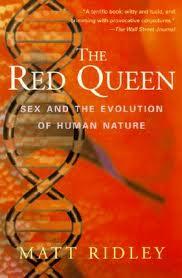
The Red Queen takes its title from Lewis Carroll's Through the Looking-Glass, where the Red Queen tells Alice she must keep running just to stay in the same place.
Matt Ridley · 1994 · 8h 0m
Full summary and key takeaways →The 11 questions
- 1.
Ridley argues that sex exists primarily as a defense against parasites. Does this explanation change how you think about reproduction as a biological phenomenon?
- 2.
The book describes mate preferences that appear cross-culturally as evidence of evolutionary psychology. How do you evaluate the distinction between universal preferences and culturally shaped ones?
- 3.
Ridley draws a careful line between evolutionary explanation and moral prescription. Do you think he succeeds in maintaining it? Where does the line become hard to draw?
- 4.
The Red Queen metaphor suggests that no organism ever achieves a stable winning position. How does this apply to competition in domains beyond biology — technology, business, relationships?
- 5.
Evolutionary psychology of the 1990s was more confident than subsequent research sometimes supported. How should readers engage with science writing that predates significant revisions in the field?
- 6.
The argument that female choosiness and male competition follow from reproductive biology is controversial. What evidence would you need to accept or reject this framework?
- 7.
Ridley argues that jealousy has evolutionary logic, but its expression is culturally variable. How do you distinguish the evolved tendency from the cultural form it takes?
- 8.
Genetic diversity through sex is presented as a long-term adaptive strategy. Where else in life do you see analogous tradeoffs between short-term efficiency and long-term resilience?
- 9.
The book covers research on physical attractiveness and its cross-cultural consistency. How does this interact with your own views about beauty standards and their social construction?
- 10.
The 'handicap principle' suggests that costly, hard-to-fake signals evolve as reliable indicators of genetic quality. Where do you see analogous signaling in human social life?
- 11.
If human preferences have deep evolutionary roots, what implications does that have for efforts to change social norms around gender, attraction, or mating behavior?
How to run the discussion
- Pick six to eight, not all of them. An hour of real discussion covers fewer questions than anyone expects, and racing the list is what makes a book club feel like homework.
- Open with what people noticed, not what they concluded. Asking for a verdict first hardens opinions before anyone has heard each other.
- Let the disagreement run. The questions below that split a room are the ones worth the time; the ones everyone answers the same way can be skipped.
- Ask the quiet person a specific question. A direct, narrow question is far easier to answer than an open invitation to contribute.
Themes worth steering toward
If the conversation stalls, these are the threads that usually restart it.
Common questions
What are good book club questions for The Red Queen: Sex and the Evolution of Human Nature?
Here are 11 book club questions for The Red Queen: Sex and the Evolution of Human Nature by Matt Ridley, ordered to open easily and end somewhere worth arguing about. The strongest openers ask what each reader noticed rather than what they concluded, and the discussion usually turns on evolution, sexual selection, human nature.
How long should a book club discussion of The Red Queen: Sex and the Evolution of Human Nature last?
Most groups run 60 to 90 minutes of actual discussion. That is roughly six to eight questions, not all of them, so pick the ones that suit your group rather than working down the list in order.
What are the main themes in The Red Queen: Sex and the Evolution of Human Nature?
Evolution, Sexual selection, Human nature, Genetics, Competition. Those are the threads most likely to divide a room, which makes them the useful places to steer a discussion that has gone quiet.
Picking the next one? See books like The Red Queen: Sex and the Evolution of Human Nature or questions for other book club picks.
