Talk to The Redbreast like its author wrote you back.
Get the ideas that fit your life — not generic summaries.
- Chat with the book
- Audiobook-style main ideas
- Adapts to your life and goals
- Helps you take action
The Redbreast, in detail
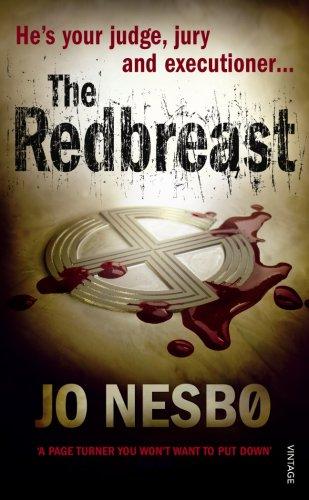
The Redbreast is the third Harry Hole novel and the one that established Nesbø as a major force in Scandinavian crime fiction. Oslo detective Harry Hole investigates a series of seemingly unconnected events — a rare WWII-era Märklin rifle, a dead man in a hospital, whispers about a figure from Norway's shameful past — while the novel cuts back to 1942 and 1944, following Norwegian volunteers on the Eastern Front fighting for the Nazis. The two timelines inch toward each other with the slow patience of a sniper.
What the book is actually about is Norway's relationship with its wartime collaborators. Hundreds of Norwegians volunteered for the Waffen-SS and fought alongside Germany on the Eastern Front. Nesbø doesn't make them cartoonish villains. The men in 1942 are young, confused, and in some cases genuinely brave — which makes the weight of what they represent all the harder. The modern investigation keeps returning to the question of what obligations the present owes to the past, and whether crimes buried by decades can still demand justice.
Structurally, The Redbreast is more ambitious than most genre thrillers. The dual timeline requires patience but pays off, and Nesbø is careful to make the historical sections feel substantive rather than decorative. Harry Hole is one of the better-drawn detectives in the genre — genuinely flawed, alcoholic, loyal in complicated ways — and this is the novel where his character clicks into full focus. The prose in translation (Don Bartlett did this one) is clean and direct without being flat.
Readers who like their crime fiction slow-building and historically grounded will find this rewarding. Those who want tight pacing and frequent plot turns may find the 1940s sections drag. It's long and it takes time to assemble. But the payoff is a thriller that has something real on its mind, not just a puzzle to solve.
The big ideas
- 1.
Nesbø uses the thriller format to examine a chapter of Norwegian history — the Waffen-SS volunteers — that the country has historically preferred to forget.
- 2.
Harry Hole's alcoholism isn't window dressing. It shapes his judgment, his relationships, and how close he gets to self-destruction, which makes him more interesting than the average competent detective.
- 3.
The dual timeline structure earns its complexity: the 1940s chapters humanize the people whose crimes the present-day investigation is trying to unravel, which makes the moral stakes messier.
