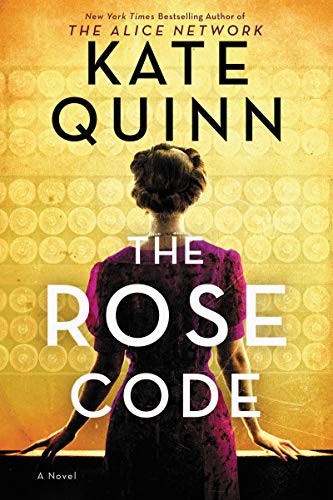
Talk to The Rose Code like its author wrote you back.
Get the ideas that fit your life — not generic summaries.
- Chat with the book
- Audiobook-style main ideas
- Adapts to your life and goals
- Helps you take action
The Rose Code, in detail
Three women meet at Bletchley Park in 1940: Osla, a glamorous debutante with a secret German-speaking talent; Mab, a working-class girl from Bethnal Green who wants more than her origins allow; and Beth, a shy, brilliant eccentric from a controlling family who turns out to be one of the best codebreakers on the estate. The novel follows their friendship and collaboration across World War II, then picks up the story in 1947 during the frantic days before Princess Elizabeth's wedding, when one of them — now confined to a psychiatric institution — reaches out about a traitor who was never caught.
The book is fundamentally about what Bletchley Park asked of its workers: absolute secrecy, even from spouses and family, for decades after the war. That enforced silence is Quinn's central theme. The women who broke codes at Bletchley — a workforce that was majority female — came home after the war unable to speak of what they had done, receiving no recognition, sometimes not even to themselves. The Rose Code uses the betrayal mystery as a plot engine, but the emotional core is that silencing: what it costs to do important work that must remain invisible.
Quinn's dual-timeline structure here spans 1940–1945 in the wartime sections and 1947 in the frame narrative, and she manages the larger cast with more confidence than in some of her earlier work. The three protagonists are distinct in voice and believably differentiated in class, background, and emotional register. The historical research on Bletchley — the Hut structures, the bombes, the specific codebreaking methods, the culture of brilliant eccentrics — is thorough and integrated rather than decorative.
Fans of Quinn's earlier dual-timeline WWII fiction will find this her most ambitious novel to date. Readers new to her work will find it an accessible entry point. As with The Alice Network, the ending delivers emotional resolution in ways literary fiction tends to withhold — which is either a feature or a bug depending on what you bring to the book.
The big ideas
- 1.
The central irony the novel builds around: the women who helped win the war at Bletchley Park were legally required to remain silent about it, often for decades, and received almost no public recognition.
- 2.
Beth's genius is portrayed as inseparable from her neurodivergence — her family and society read it as a problem to be managed while Bletchley reads it as an asset. That double framing is one of the novel's sharpest observations.
- 3.
Quinn uses the betrayal mystery to examine friendship under extreme pressure — specifically, what happens when wartime secrecy makes honest communication impossible even between people who trust each other.
