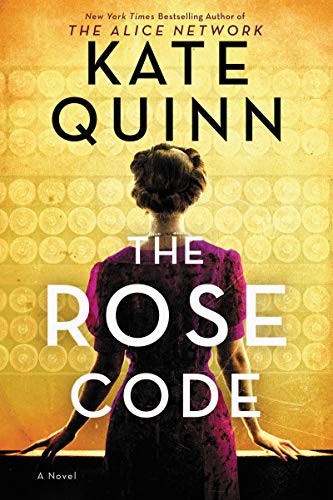
The Rose Code by Kate Quinn is a 2021 historical fiction book about bletchley park and codebreaking, female friendship and betrayal, wartime secrets. The central irony the novel builds around: the women who helped win the war at Bletchley Park were legally required to remain silent about it, often for decades, and received almost no public recognition.
Summary
Three women meet at Bletchley Park in 1940: Osla, a glamorous debutante with a secret German-speaking talent; Mab, a working-class girl from Bethnal Green who wants more than her origins allow; and Beth, a shy, brilliant eccentric from a controlling family who turns out to be one of the best codebreakers on the estate. The novel follows their friendship and collaboration across World War II, then picks up the story in 1947 during the frantic days before Princess Elizabeth's wedding, when one of them — now confined to a psychiatric institution — reaches out about a traitor who was never caught.
The book is fundamentally about what Bletchley Park asked of its workers: absolute secrecy, even from spouses and family, for decades after the war. That enforced silence is Quinn's central theme. The women who broke codes at Bletchley — a workforce that was majority female — came home after the war unable to speak of what they had done, receiving no recognition, sometimes not even to themselves. The Rose Code uses the betrayal mystery as a plot engine, but the emotional core is that silencing: what it costs to do important work that must remain invisible.
Quinn's dual-timeline structure here spans 1940–1945 in the wartime sections and 1947 in the frame narrative, and she manages the larger cast with more confidence than in some of her earlier work. The three protagonists are distinct in voice and believably differentiated in class, background, and emotional register. The historical research on Bletchley — the Hut structures, the bombes, the specific codebreaking methods, the culture of brilliant eccentrics — is thorough and integrated rather than decorative.
Fans of Quinn's earlier dual-timeline WWII fiction will find this her most ambitious novel to date. Readers new to her work will find it an accessible entry point. As with The Alice Network, the ending delivers emotional resolution in ways literary fiction tends to withhold — which is either a feature or a bug depending on what you bring to the book.
Talk to The Rose Code like its author wrote you back.
Get the ideas that fit your life — not generic summaries.
- Chat with the book
- Audiobook-style main ideas
- Adapts to your life and goals
- Helps you take action
Key takeaways
- 1.
The central irony the novel builds around: the women who helped win the war at Bletchley Park were legally required to remain silent about it, often for decades, and received almost no public recognition.
- 2.
Beth's genius is portrayed as inseparable from her neurodivergence — her family and society read it as a problem to be managed while Bletchley reads it as an asset. That double framing is one of the novel's sharpest observations.
- 3.
Quinn uses the betrayal mystery to examine friendship under extreme pressure — specifically, what happens when wartime secrecy makes honest communication impossible even between people who trust each other.
- 4.
Mab's class ambitions are treated sympathetically rather than satirically. The novel understands that wanting more than your origins is rational, not shameful.
- 5.
The psychiatric institution that holds Beth in 1947 is a deliberate horror — Quinn uses it to make a point about how women who didn't conform to postwar domestic expectations were managed.
- 6.
The wartime sections capture Bletchley's specific culture — brilliant, eccentric, exhausted, paranoid — with enough detail to feel real without becoming a museum exhibit.
- 7.
The friendship between the three women survives betrayal not because the betrayal was minor but because the novel insists that long relationships accumulate weight that isn't erased by a single failure.
- 8.
Osla Kendall is based partly on a real person — Osla Benning, who worked at Bletchley and was briefly engaged to Prince Philip. Quinn's use of a real historical figure as a character anchor is effective and carefully handled.
Discussion questions
Use these on your own, with a book club, or as chat starters in Superbook. Book club version, ready to copy or print →
- 1.
Beth's confinement in a psychiatric institution in 1947 is presented as unjust and ideologically motivated. How much does the novel distinguish between bad intentions and the limits of mid-century medicine?
- 2.
The three women come from very different class backgrounds. How does Quinn use those differences to drive conflict, and does she ultimately flatten them in the service of friendship?
- 3.
The novel's central secret — the traitor's identity — is withheld for most of the book. Did you figure it out early? Did it matter to your enjoyment?
- 4.
Bletchley Park kept its secrets for decades after the war. How do you think about the real women who did this work and couldn't speak of it? What does enforced invisibility do to a person's sense of self?
- 5.
Osla is engaged to a man who will become central to British royal history. Quinn handles that material carefully. Did you find it distracting or did it add texture?
- 6.
The betrayal at the heart of the novel involves someone choosing safety over loyalty. Given the circumstances, can you understand that choice even if you don't excuse it?
- 7.
Quinn writes three distinct female protagonists across class lines. Which of the three felt most fully realized to you, and why?
- 8.
How does The Rose Code compare to The Alice Network — both in what it's attempting and in how well it succeeds?
- 9.
The psychiatric institution scenes are deliberately disturbing. Did Quinn go far enough in indicting the system, or did she pull back to keep the plot moving?
- 10.
The novel insists that the three women's friendship was worth preserving despite the betrayal. Is that a satisfying conclusion, or does it feel unearned?
- 11.
Codebreaking is inherently abstract — patterns in text, statistical analysis, logical inference. How does Quinn make it feel gripping? Where did she succeed or struggle?
- 12.
The frame narrative is set during the days before Princess Elizabeth's wedding. How does that choice — a moment of national celebration — contrast with Beth's situation in the asylum?
Themes
Frequently asked questions
-
Is The Rose Code based on true events?
Substantially yes. Bletchley Park, the Hut structure, the bombe machines, and the general operation of the codebreaking effort are historically accurate. Osla Kendall is loosely based on Osla Benning, a real Bletchley worker. Beth, Mab, and the specific betrayal plot are fictional. Quinn's historical note is detailed and worth reading.
-
Do I need to read The Alice Network first?
No. The books are standalone and share no characters. They do share Quinn's dual-timeline structure and her interest in overlooked women in wartime, so readers who loved one will likely enjoy the other — but either can be read first.
-
Is the codebreaking hard to follow?
Quinn explains Bletchley's methods accessibly without oversimplifying. You don't need any mathematical background. The puzzle-solving is made viscerally engaging rather than technically dense.
-
Who shouldn't read The Rose Code?
Readers who find popular fiction's tendency toward satisfying resolution dishonest will struggle here. The ending ties things up considerably, in a way that feels earned to most readers but may feel too neat to others.
-
Is there a film or TV adaptation?
Not as of publication. The rights have attracted interest, but no adaptation has been produced.
Similar books
The Alice Network
Kate Quinn
All Quiet on the Western Front
Erich Maria Remarque
The Diary of a Young Girl
Anne Frank
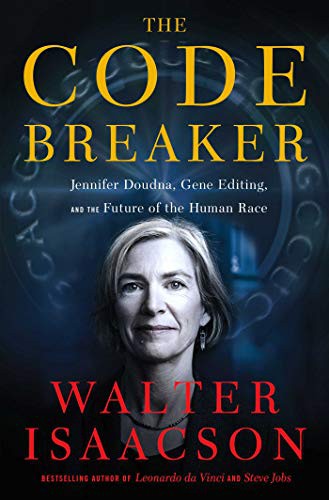
The Code Breaker: Jennifer Doudna, Gene Editing, and the Future of the Human Race
Walter Isaacson
