Talk to The Sabbath like its author wrote you back.
Get the ideas that fit your life — not generic summaries.
- Chat with the book
- Audiobook-style main ideas
- Adapts to your life and goals
- Helps you take action
What it argues
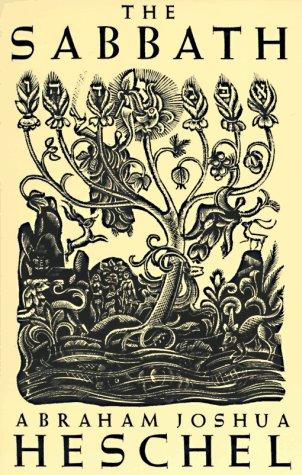
The Sabbath is Abraham Joshua Heschel's meditation on the Jewish day of rest, first published in 1951. It is not a how-to guide on observance. It is a philosophical argument about the nature of time and the category of the holy. Heschel's thesis is that Western civilization is oriented toward the conquest of space — toward acquiring territory, objects, wealth, power — and that the Sabbath is Judaism's radical contribution to human civilization: the sanctification of time rather than space. The cathedral is the West's monument to the sacred. The Sabbath is a cathedral in time.
The book is short — under 100 pages in most editions — but compressed. Heschel argues that the Sabbath creates a different kind of presence. On ordinary days the self is engaged in doing, making, transforming the world. On the Sabbath the self is asked simply to be. This is not passive. It requires active resistance to the habits of production and consumption that ordinarily structure the week. The traditional prohibitions on work are not arbitrary; they are the architecture of a different temporal experience.
What it gets right
- 1.
Western civilization is oriented toward space — acquiring, building, possessing. The Sabbath is an orientation toward time, toward presence in moments rather than dominion over things.
- 2.
The holy in Judaism is first located in time, not in objects or places. 'And God blessed the seventh day and made it holy' — not a mountain, not a river.
- 3.
Sabbath rest is not mere cessation of activity. It requires constructing a different quality of attention — one that is not oriented toward production or transformation.
What it covers
Who wrote it
Abraham Joshua Heschel (1907–1972) was a Polish-born Jewish theologian, philosopher, and civil rights activist. He studied at the University of Berlin, received his doctorate from the Hochschule für die Wissenschaft des Judentums, and fled Nazi Germany in 1938. He eventually settled in the United States and taught at the Jewish Theological Seminary in New York until his death. In addition to The Sabbath, his major works include God in Search of Man, Man Is Not Alone, and The Prophets. He was a visible and outspoken presence in the American civil rights movement and opposed the Vietnam War. He is widely regarded as one of the most important Jewish thinkers of the 20th century.
