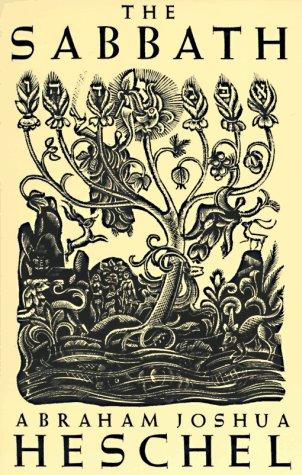
Talk to The Sabbath like its author wrote you back.
Get the ideas that fit your life — not generic summaries.
- Chat with the book
- Audiobook-style main ideas
- Adapts to your life and goals
- Helps you take action
The Sabbath, in detail
The Sabbath is Abraham Joshua Heschel's meditation on the Jewish day of rest, first published in 1951. It is not a how-to guide on observance. It is a philosophical argument about the nature of time and the category of the holy. Heschel's thesis is that Western civilization is oriented toward the conquest of space — toward acquiring territory, objects, wealth, power — and that the Sabbath is Judaism's radical contribution to human civilization: the sanctification of time rather than space. The cathedral is the West's monument to the sacred. The Sabbath is a cathedral in time.
The book is short — under 100 pages in most editions — but compressed. Heschel argues that the Sabbath creates a different kind of presence. On ordinary days the self is engaged in doing, making, transforming the world. On the Sabbath the self is asked simply to be. This is not passive. It requires active resistance to the habits of production and consumption that ordinarily structure the week. The traditional prohibitions on work are not arbitrary; they are the architecture of a different temporal experience.
Heschel writes with poetic intensity, drawing on classical Talmudic sources, Kabbalistic imagery, and his own phenomenological sensibility. The prose is lyrical rather than argumentative. This is both the book's strength and its limitation: it conveys an experience more than it makes a case. Readers who arrive skeptical may leave without having been persuaded, but with a clearer sense of what they were skeptical about.
The book has been adopted well beyond Jewish readers — by Christians, secular intellectuals, and contemplatives of various traditions who recognize in Heschel's argument a critique of workaholic culture that is more philosophically serious than most. The question the book keeps raising is whether rest is possible when acquisition has become not just a habit but an identity. Heschel says the Sabbath is a weekly answer to that question, and that humanity needed it to survive.
The big ideas
- 1.
Western civilization is oriented toward space — acquiring, building, possessing. The Sabbath is an orientation toward time, toward presence in moments rather than dominion over things.
- 2.
The holy in Judaism is first located in time, not in objects or places. 'And God blessed the seventh day and made it holy' — not a mountain, not a river.
- 3.
Sabbath rest is not mere cessation of activity. It requires constructing a different quality of attention — one that is not oriented toward production or transformation.
