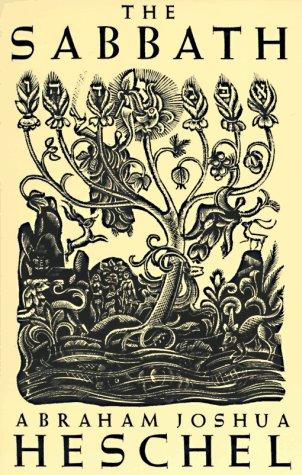
The Sabbath by Abraham Joshua Heschel is a 1951 religion & spirituality book about time, rest, sacred. Western civilization is oriented toward space — acquiring, building, possessing. The Sabbath is an orientation toward time, toward presence in moments rather than dominion over things.
Summary
The Sabbath is Abraham Joshua Heschel's meditation on the Jewish day of rest, first published in 1951. It is not a how-to guide on observance. It is a philosophical argument about the nature of time and the category of the holy. Heschel's thesis is that Western civilization is oriented toward the conquest of space — toward acquiring territory, objects, wealth, power — and that the Sabbath is Judaism's radical contribution to human civilization: the sanctification of time rather than space. The cathedral is the West's monument to the sacred. The Sabbath is a cathedral in time.
The book is short — under 100 pages in most editions — but compressed. Heschel argues that the Sabbath creates a different kind of presence. On ordinary days the self is engaged in doing, making, transforming the world. On the Sabbath the self is asked simply to be. This is not passive. It requires active resistance to the habits of production and consumption that ordinarily structure the week. The traditional prohibitions on work are not arbitrary; they are the architecture of a different temporal experience.
Heschel writes with poetic intensity, drawing on classical Talmudic sources, Kabbalistic imagery, and his own phenomenological sensibility. The prose is lyrical rather than argumentative. This is both the book's strength and its limitation: it conveys an experience more than it makes a case. Readers who arrive skeptical may leave without having been persuaded, but with a clearer sense of what they were skeptical about.
The book has been adopted well beyond Jewish readers — by Christians, secular intellectuals, and contemplatives of various traditions who recognize in Heschel's argument a critique of workaholic culture that is more philosophically serious than most. The question the book keeps raising is whether rest is possible when acquisition has become not just a habit but an identity. Heschel says the Sabbath is a weekly answer to that question, and that humanity needed it to survive.
Talk to The Sabbath like its author wrote you back.
Get the ideas that fit your life — not generic summaries.
- Chat with the book
- Audiobook-style main ideas
- Adapts to your life and goals
- Helps you take action
Key takeaways
- 1.
Western civilization is oriented toward space — acquiring, building, possessing. The Sabbath is an orientation toward time, toward presence in moments rather than dominion over things.
- 2.
The holy in Judaism is first located in time, not in objects or places. 'And God blessed the seventh day and made it holy' — not a mountain, not a river.
- 3.
Sabbath rest is not mere cessation of activity. It requires constructing a different quality of attention — one that is not oriented toward production or transformation.
- 4.
The traditional Sabbath prohibitions on work are a form of architecture: they enforce the boundary between the week's mode of being and the day's mode of being.
- 5.
Heschel argues that the person who cannot stop working is not free. The Sabbath is a practice of freedom from the compulsion to produce.
- 6.
The day is experienced as a foretaste of something beyond ordinary life — what Heschel, following tradition, calls a glimpse of the world to come. This is less a doctrinal claim than a phenomenological one.
- 7.
Technology's power to occupy every moment creates a new threat to the Sabbath that Heschel did not fully anticipate in 1951 but his argument addresses directly.
- 8.
The critique of modern civilization in the book is not a rejection of progress. It is a claim that civilization needs a regular counterforce to its own tendencies toward accumulation and restlessness.
Discussion questions
Use these on your own, with a book club, or as chat starters in Superbook. Book club version, ready to copy or print →
- 1.
Heschel says humanity is enslaved to space — to acquiring things — and the Sabbath is liberation into time. Does that diagnosis resonate with how you experience your week?
- 2.
What would a weekly practice of genuine rest look like in your own life? Not just stopping work, but creating a different quality of attention?
- 3.
Heschel argues that the prohibitions on Sabbath work are not restrictions but liberations. Do you find that reframe convincing, or does it feel like rationalization?
- 4.
The book was written in 1951, before smartphones. How does the always-on digital environment change the Sabbath argument? Does it strengthen it or make it hopelessly impractical?
- 5.
Heschel says the great problem of civilization is that man tamed the beast but not his own inner nature. What do you think he means, and do you agree?
- 6.
The idea of 'a cathedral in time' is Heschel's central image. What does it mean to build something sacred in time rather than in space?
- 7.
Have you ever experienced anything like what Heschel describes — a day or period where you genuinely stopped producing and found a different quality of presence? What made it possible?
- 8.
Heschel writes that the Sabbath is a weekly rehearsal of what matters. If you had to name what you rehearse weekly by habit, what would it be? Is it what you'd choose?
- 9.
The book is short and poetic rather than argumentative. Did that approach work for you, or did you want more evidence and less lyricism?
- 10.
Heschel was a committed activist — he marched in Selma with Martin Luther King Jr. — as well as a contemplative. How do you reconcile the inward focus of this book with that political engagement?
- 11.
Do you think genuine rest requires a shared communal framework, or can it be achieved individually? What does the community provide that solo rest does not?
- 12.
If you took the Sabbath argument seriously regardless of its religious framing, what would you actually change about how you spend one day a week?
Themes
Frequently asked questions
-
Is The Sabbath worth reading if you are not Jewish?
Yes. Heschel explicitly frames the argument in universal terms — as a philosophical critique of civilization's orientation toward acquisition and a case for the sanctification of time. The Jewish practice is the vehicle, but the argument transcends it. Many non-Jewish readers have found it one of the most useful short books on rest, attention, and the problem of modern busyness.
-
How long is The Sabbath?
Under 100 pages in most editions — roughly two hours to read through. It is, however, a book to linger in rather than consume. The prose is dense with meaning and rewards re-reading.
-
What is the central argument of The Sabbath?
That civilization is dominated by the conquest of space — acquiring, building, owning — and that the Sabbath is Judaism's answer: a weekly return to time as the primary dimension of the sacred. Rest, in this view, is not laziness but a practice of freedom from the compulsion to produce.
-
Do I need religious background to understand The Sabbath?
Basic familiarity with the concept of the Jewish day of rest helps, but Heschel does not assume observance in his reader. He is writing as a philosopher addressing a secular and modern audience as much as a religious one.
-
What distinguishes Heschel's writing from typical religious self-help?
The prose is genuinely literary — lyrical, layered, and not interested in prescribing behaviors so much as reshaping perception. Heschel wants you to see time differently, not to follow a seven-step program. That orientation makes the book more durable and less practical at the same time.