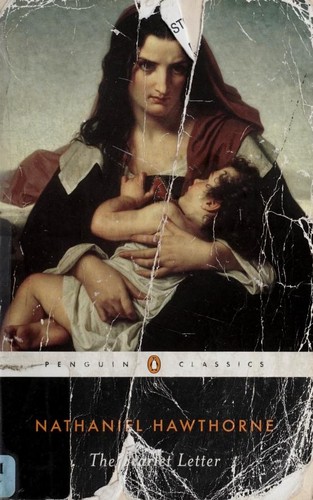
Talk to The Scarlet Letter like its author wrote you back.
Get the ideas that fit your life — not generic summaries.
- Chat with the book
- Audiobook-style main ideas
- Adapts to your life and goals
- Helps you take action
The Scarlet Letter, in detail
The Scarlet Letter is set in Puritan Boston in the 1640s and opens with Hester Prynne, a young woman who has given birth to a child while her husband is absent, being released from prison into the public square. She will wear a scarlet letter "A" on her chest for the rest of her life — a mark of adultery, meant to define and shame her. She accepts it, and over time she transforms the letter from a symbol of disgrace into something else entirely.
The novel's central dramatic situation is actually less about Hester than about the other figures caught in the same moral knot: Arthur Dimmesdale, the young minister who is the child's father and who cannot bring himself to confess; and Roger Chillingworth, Hester's long-absent husband, who arrives in Boston and makes it his purpose to expose Dimmesdale through psychological torment. The three of them are locked in a strange closed triangle — shame, guilt, and revenge — and Hawthorne is interested in what each of those positions costs the person who holds it.
The prose is dense and allegorical in ways that require patience. Hawthorne is writing about Puritan New England from the position of a nineteenth-century New Englander with complicated feelings about his own family history (an ancestor was a judge in the Salem witch trials). The result is something that reads less like a conventional novel and more like a sustained moral inquiry written in a symbolic register.
This is required reading in many American high schools, which may be the main reason people don't read it as adults. Returning to it, it is a stranger and richer book than its reputation as a morality tale suggests — particularly in its portrait of Hester, whose quiet defiance and self-sufficiency over fifteen years of ostracism is the novel's most compelling argument about how people survive punishment.
The big ideas
- 1.
Hester Prynne is more fully realized than many of the female protagonists of later American fiction — she endures public shame without being broken by it, and she forms her own moral code independent of the community that condemned her.
- 2.
Dimmesdale's hidden guilt is shown to be far more destructive than Hester's public shame. Hawthorne suggests that unexpressed guilt corrodes the self in ways that punishment doesn't.
- 3.
Chillingworth's transformation from a cold intellectual to an instrument of revenge is the novel's darkest argument: that vengeance destroys the person who pursues it as thoroughly as the person who receives it.
