Thriller · Book club
The Silent Patient book club questions
Here are 12 book club questions for The Silent Patient by Alex Michaelides, ordered to open easily and end somewhere worth arguing about. Copy them, print them, or bring them up one at a time.
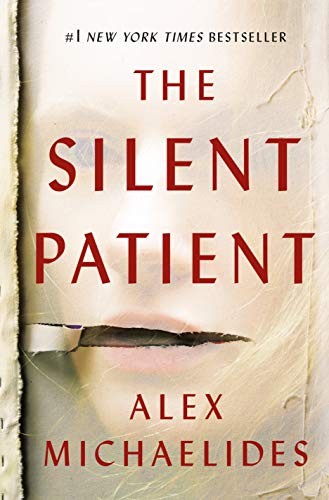
Alicia Berenson, a celebrated painter, shoots her husband five times in the face and then never speaks another word.
Alex Michaelides · 2019 · 5h 45m
Full summary and key takeaways →The 12 questions
- 1.
Theo presents himself as uniquely equipped to help Alicia. By the end, do you read his certainty as hubris, genuine clinical confidence, or something more disturbing?
- 2.
The Alcestis myth — she chooses to die so her husband can live — does the novel use it straight, ironically, or as a red herring? Does your answer change after the reveal?
- 3.
Alicia's silence is treated by almost every character as a symptom to be cured. Is there a reading of the novel in which her silence is the sanest response available to her?
- 4.
The diary form lets Alicia present herself sympathetically. How much of your response to her character was shaped by the form of her narrative rather than its content?
- 5.
Theo's personal history — his marriage, his therapy with his own analyst — is given a lot of page time. Does it function as genuine character depth, or is it primarily misdirection?
- 6.
The Grove's staff are mostly compromised: underpaid, territorial, ethically flexible. What is the novel saying about institutional psychiatric care as a context for healing?
- 7.
The final reveal depends on the reader having accepted a particular framing of Theo's reliability. Did you feel manipulated, or did you feel the novel played fair?
- 8.
Alicia is a painter, and her final painting is central to the novel. What does art-making represent for her — communication, confession, self-protection, or something else?
- 9.
The novel was a massive commercial debut. What do you think accounts for its particular appeal at this moment — what does it give readers that they're looking for?
- 10.
Transference and countertransference are presented as universally operative. Do you agree with the novel's implicit claim that all therapeutic relationships are contaminated by the therapist's own needs?
- 11.
How does knowing the twist change the experience of re-reading the early chapters? Is it a better book the second time?
- 12.
The ending is technically complete but emotionally ambiguous. What do you think happens to each major character after the final page?
How to run the discussion
- Pick six to eight, not all of them. An hour of real discussion covers fewer questions than anyone expects, and racing the list is what makes a book club feel like homework.
- Open with what people noticed, not what they concluded. Asking for a verdict first hardens opinions before anyone has heard each other.
- Let the disagreement run. The questions below that split a room are the ones worth the time; the ones everyone answers the same way can be skipped.
- Ask the quiet person a specific question. A direct, narrow question is far easier to answer than an open invitation to contribute.
Themes worth steering toward
If the conversation stalls, these are the threads that usually restart it.
Common questions
What are good book club questions for The Silent Patient?
Here are 12 book club questions for The Silent Patient by Alex Michaelides, ordered to open easily and end somewhere worth arguing about. The strongest openers ask what each reader noticed rather than what they concluded, and the discussion usually turns on silence and confession, obsession, trauma and repression.
How long should a book club discussion of The Silent Patient last?
Most groups run 60 to 90 minutes of actual discussion. That is roughly six to eight questions, not all of them, so pick the ones that suit your group rather than working down the list in order.
What are the main themes in The Silent Patient?
Silence and confession, Obsession, Trauma and repression, Unreliable narration, Art as expression. Those are the threads most likely to divide a room, which makes them the useful places to steer a discussion that has gone quiet.
Picking the next one? See books like The Silent Patient or questions for other book club picks.
