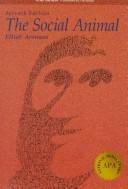
Talk to The Social Animal like its author wrote you back.
Get the ideas that fit your life — not generic summaries.
- Chat with the book
- Audiobook-style main ideas
- Adapts to your life and goals
- Helps you take action
The Social Animal, in detail
Elliot Aronson is one of the most influential social psychologists in the history of the field, and The Social Animal, first published in 1972 and now in its twelfth edition, is the textbook introduction to social psychology that has shaped how generations of students think about human behavior. It is unusual among textbooks in being genuinely readable and in presenting the subject with intellectual honesty about its complications and limitations.
The book covers the field's central findings: conformity and obedience (Milgram, Asch), attitude change and persuasion, self-justification and cognitive dissonance (Aronson was Festinger's student and expanded dissonance theory), prejudice and discrimination, aggression, attraction, and the social influence of groups. Each topic is presented through the classic experiments that defined it, with enough context to understand both what the experiment showed and why it mattered.
Aronson's particular contribution to dissonance theory is his focus on self-concept. He argued that dissonance is most powerful when it threatens the belief that one is a competent, moral, and adequate person. This expansion — from simple belief contradiction to self-concept threat — helps explain why people justify their mistakes, why competent people downplay their failures, and why we are most resistant to evidence that contradicts our sense of who we are.
The book has been continuously revised and remains in print more than fifty years after its original publication. Each edition has updated the research, addressed criticisms, and incorporated new findings. The core social psychology it covers is foundational, and Aronson's voice — personal, curious, occasionally funny — makes the material more engaging than most comprehensive treatments. For general readers who want a thorough grounding in why people behave as they do in social contexts, it is still among the best starting points available.
The big ideas
- 1.
Humans are social animals whose behavior is profoundly shaped by the presence, expectations, and actions of others — often in ways that override individual judgment and values.
- 2.
Conformity and obedience are powerful. Asch's line experiments and Milgram's shock experiments both demonstrate that most people will go against their own perceptions or values to conform to group or authority pressure.
- 3.
Cognitive dissonance is most powerful when it threatens self-concept. People are most motivated to reduce dissonance when their beliefs about being competent and moral are contradicted.
