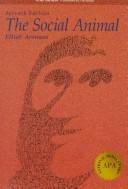
The Social Animal by Elliot Aronson is a 1972 psychology book about social psychology, conformity, persuasion. Humans are social animals whose behavior is profoundly shaped by the presence, expectations, and actions of others — often in ways that override individual judgment and values.
Summary
Elliot Aronson is one of the most influential social psychologists in the history of the field, and The Social Animal, first published in 1972 and now in its twelfth edition, is the textbook introduction to social psychology that has shaped how generations of students think about human behavior. It is unusual among textbooks in being genuinely readable and in presenting the subject with intellectual honesty about its complications and limitations.
The book covers the field's central findings: conformity and obedience (Milgram, Asch), attitude change and persuasion, self-justification and cognitive dissonance (Aronson was Festinger's student and expanded dissonance theory), prejudice and discrimination, aggression, attraction, and the social influence of groups. Each topic is presented through the classic experiments that defined it, with enough context to understand both what the experiment showed and why it mattered.
Aronson's particular contribution to dissonance theory is his focus on self-concept. He argued that dissonance is most powerful when it threatens the belief that one is a competent, moral, and adequate person. This expansion — from simple belief contradiction to self-concept threat — helps explain why people justify their mistakes, why competent people downplay their failures, and why we are most resistant to evidence that contradicts our sense of who we are.
The book has been continuously revised and remains in print more than fifty years after its original publication. Each edition has updated the research, addressed criticisms, and incorporated new findings. The core social psychology it covers is foundational, and Aronson's voice — personal, curious, occasionally funny — makes the material more engaging than most comprehensive treatments. For general readers who want a thorough grounding in why people behave as they do in social contexts, it is still among the best starting points available.
Talk to The Social Animal like its author wrote you back.
Get the ideas that fit your life — not generic summaries.
- Chat with the book
- Audiobook-style main ideas
- Adapts to your life and goals
- Helps you take action
Key takeaways
- 1.
Humans are social animals whose behavior is profoundly shaped by the presence, expectations, and actions of others — often in ways that override individual judgment and values.
- 2.
Conformity and obedience are powerful. Asch's line experiments and Milgram's shock experiments both demonstrate that most people will go against their own perceptions or values to conform to group or authority pressure.
- 3.
Cognitive dissonance is most powerful when it threatens self-concept. People are most motivated to reduce dissonance when their beliefs about being competent and moral are contradicted.
- 4.
Attitudes and behavior influence each other in both directions. We do not simply act on our attitudes; we also infer our attitudes from our behaviors, particularly when those behaviors cannot be easily rationalized.
- 5.
Attraction follows predictable patterns: proximity, familiarity, similarity, and reciprocal liking are among the most robust predictors of interpersonal attraction. The effects operate largely below conscious awareness.
- 6.
Prejudice is maintained by several independent mechanisms: categorization, in-group favoritism, out-group homogeneity, and the self-serving motivations that confirmation bias serves. These interact and reinforce each other.
- 7.
Aggression is not a simple drive but a response to frustration, provocation, and social learning. The frustration-aggression hypothesis and social learning theory both capture part of the picture.
Discussion questions
Use these on your own, with a book club, or as chat starters in Superbook. Book club version, ready to copy or print →
- 1.
Aronson argues that social influence shapes behavior far more than we typically assume. Looking at the Milgram and Asch experiments, what surprised you most about the results?
- 2.
He applies dissonance theory to self-concept rather than just abstract belief. Can you identify a time when you reduced dissonance by justifying a behavior rather than changing it?
- 3.
The book covers the psychology of attraction: proximity, familiarity, similarity. How much do you think those factors explain the important relationships in your life?
- 4.
Prejudice involves multiple independent mechanisms — categorization, in-group favoritism, confirmation bias. Which do you think is hardest to interrupt, and what would that interruption look like?
- 5.
Aronson was Festinger's student and helped develop cognitive dissonance theory. How does the self-concept version of dissonance — threat to one's sense of being competent and moral — differ from the simpler belief-contradiction version?
- 6.
The book has been revised and updated for fifty years. What aspects of the original social psychology research do you think have aged best and which have not held up?
- 7.
He presents social psychology as fundamentally about how social context shapes individual behavior. What does that imply for how much responsibility we place on individuals versus contexts?
- 8.
Conformity experiments show most people conform in ways they later regret. What conditions allow people to resist conformity when it matters?
- 9.
The book was first written in 1972. Which social questions it addresses feel resolved and which feel as live as ever?
- 10.
Aronson's voice is personal — he draws on his own experience throughout. Does that approach increase or decrease the book's authority for you?
- 11.
Which finding or experiment in the book do you think is most misunderstood in popular culture?
Themes
Frequently asked questions
-
Is this a textbook or a general interest book?
Both. It was written as a textbook and is used in courses, but Aronson deliberately wrote it to be readable for general audiences and it functions well as popular science. It is considerably more readable than most social psychology textbooks.
-
Is the twelfth edition substantially different from the original?
Yes. Each edition has incorporated new research, addressed replication challenges, and updated the cultural context. The core experiments and theoretical framework remain, but the book has evolved with the field.
-
What is cognitive dissonance?
The psychological discomfort that arises from holding two contradictory beliefs or from acting in a way that contradicts one's beliefs. Aronson extended Festinger's theory to focus on the specific discomfort that arises when behavior threatens the belief that one is competent and moral.
-
How does this compare to Mistakes Were Made (But Not by Me)?
The later book, which Aronson co-authored with Carol Tavris, is a popular application of dissonance theory to self-justification. The Social Animal is broader — a survey of the whole field of social psychology. Both are worth reading; this one gives the foundational framework.
-
Why is this book still assigned after fifty years?
Because Aronson's framing of the basic questions of social psychology remains clear and compelling, and because the classic experiments it covers — Milgram, Asch, Festinger — remain the foundational evidence of the field. The updates keep it current without abandoning what made it essential.
Similar books
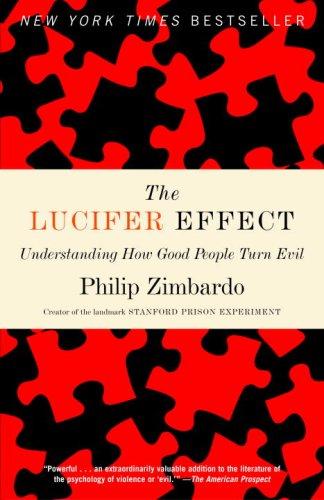
The Lucifer Effect: Understanding How Good People Turn Evil
Philip Zimbardo
The Confidence Game: Why We Fall for It Every Time
Maria Konnikova
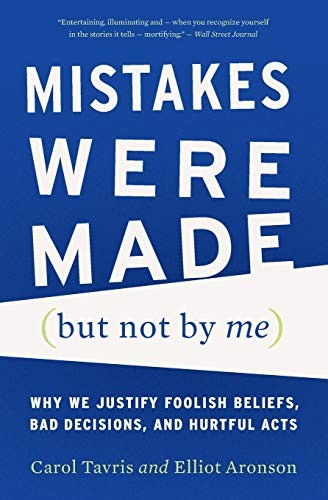
Mistakes Were Made (But Not by Me)
Carol Tavris and Elliot Aronson
Influence: The Psychology of Persuasion
Robert B. Cialdini
