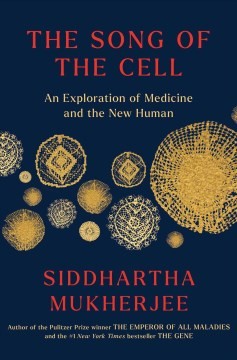
Talk to The Song of the Cell like its author wrote you back.
Get the ideas that fit your life — not generic summaries.
- Chat with the book
- Audiobook-style main ideas
- Adapts to your life and goals
- Helps you take action
What it argues
The Song of the Cell is Siddhartha Mukherjee's account of how the cell — the basic unit of life — was discovered, decoded, and eventually harnessed to rebuild and repair the human body. The book moves from the seventeenth-century microscopists who first glimpsed cells through glass to the twenty-first-century researchers engineering cellular therapies for cancer, diabetes, and immune disorders. Mukherjee's argument is that medicine is entering a cellular era: understanding what goes wrong inside cells, and learning to fix or replace them, is reshaping what it means to heal.
The structure alternates between history and clinical narrative. Mukherjee traces how the germ theory of disease gave way to a cellular theory, how organ systems were eventually understood as populations of specialized cells in constant communication, and how the discovery of stem cells opened the possibility of regeneration. Woven through the science are his patients — a woman with a collapsing immune system, a man whose cancer was attacked by engineered T-cells — whose cases ground the cellular biology in stakes that matter.
What it gets right
- 1.
The cell is the fundamental unit of life and disease. Most of what goes wrong in the human body begins as something going wrong inside or between cells.
- 2.
Medicine is shifting from organ-based thinking to cell-based thinking. Understanding cellular behavior, rather than just anatomy, is driving the next generation of treatments.
- 3.
Stem cells retain the capacity to become specialized cell types, which makes them both central to development and potentially central to regenerative medicine.
What it covers
Who wrote it
Siddhartha Mukherjee is an oncologist, cancer researcher, and Pulitzer Prize-winning author. He is an assistant professor of medicine at Columbia University and a practising physician. His previous books include The Emperor of All Maladies: A Biography of Cancer, which won the 2011 Pulitzer Prize for General Nonfiction, and The Gene: An Intimate History, a New York Times bestseller. His writing appears in The New Yorker and The New York Times Magazine. Mukherjee was born in New Delhi and trained at Stanford, Oxford, and Harvard Medical School.
