Classics · Book club
The Sorrows of Young Werther book club questions
Here are 12 book club questions for The Sorrows of Young Werther by Johann Wolfgang von Goethe, ordered to open easily and end somewhere worth arguing about. Copy them, print them, or bring them up one at a time.
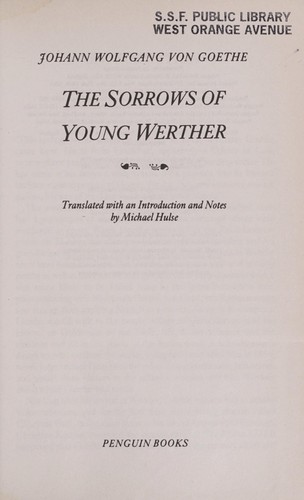
The Sorrows of Young Werther is an epistolary novel — told almost entirely in letters from the protagonist to his friend Wilhelm — about a young man of artistic sensibility who falls devastatingly in love with a woman already promised to another.
Johann Wolfgang von Goethe · 1774 · 3h 45m
Full summary and key takeaways →The 12 questions
- 1.
Is Werther sympathetic, pathetic, or both — and does your answer shift between the first and second halves of the book?
- 2.
The novel was blamed for inspiring real suicides. Is that a reasonable response to fiction, and does it change how you read the ending?
- 3.
We never get Lotte's perspective. What do you think she actually feels about Werther, and does the novel give us enough clues to guess?
- 4.
Werther is in constant friction with social hierarchy and professional expectation. How much of his suffering comes from unrequited love versus his inability to fit into any existing social role?
- 5.
Goethe himself outgrew the Wertherian worldview. Does that knowledge change how you read the book — is it an endorsement of Romantic feeling or an autopsy of it?
- 6.
The nature descriptions in the first half are ecstatic; by the end the same landscapes feel oppressive. How does Goethe achieve that shift without changing the scenery?
- 7.
Werther idealizes Homer early in the novel and turns to Ossian as his despair deepens. What does that shift in literary taste signal about his mental state?
- 8.
The novel ends with a narrator stepping in to describe the suicide. Why do you think Goethe didn't let Werther's last letter carry the ending — what does the outside perspective add?
- 9.
Is Albert, Lotte's fiancé and later husband, a villain, a reasonable man, or something more complicated?
- 10.
Werther often frames his own suffering as uniquely intense, beyond what ordinary people feel. Is this a character flaw, a symptom of depression, or something the novel presents as genuinely true about him?
- 11.
What, if anything, would have saved Werther — a different love interest, a different social context, a different century?
- 12.
The novel is under 200 pages but had an outsized cultural impact. What in its specific texture explains that — what does it do that longer, more elaborate novels couldn't have done?
How to run the discussion
- Pick six to eight, not all of them. An hour of real discussion covers fewer questions than anyone expects, and racing the list is what makes a book club feel like homework.
- Open with what people noticed, not what they concluded. Asking for a verdict first hardens opinions before anyone has heard each other.
- Let the disagreement run. The questions below that split a room are the ones worth the time; the ones everyone answers the same way can be skipped.
- Ask the quiet person a specific question. A direct, narrow question is far easier to answer than an open invitation to contribute.
Themes worth steering toward
If the conversation stalls, these are the threads that usually restart it.
Common questions
What are good book club questions for The Sorrows of Young Werther?
Here are 12 book club questions for The Sorrows of Young Werther by Johann Wolfgang von Goethe, ordered to open easily and end somewhere worth arguing about. The strongest openers ask what each reader noticed rather than what they concluded, and the discussion usually turns on unrequited love, romantic idealism, nature and feeling.
How long should a book club discussion of The Sorrows of Young Werther last?
Most groups run 60 to 90 minutes of actual discussion. That is roughly six to eight questions, not all of them, so pick the ones that suit your group rather than working down the list in order.
What are the main themes in The Sorrows of Young Werther?
Unrequited love, Romantic idealism, Nature and feeling, Self-destruction, Art and the inner life. Those are the threads most likely to divide a room, which makes them the useful places to steer a discussion that has gone quiet.
Picking the next one? See books like The Sorrows of Young Werther or questions for other book club picks.
