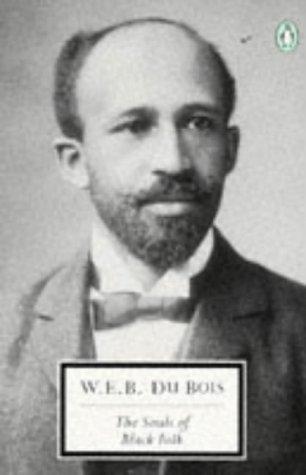
Talk to The Souls of Black Folk like its author wrote you back.
Get the ideas that fit your life — not generic summaries.
- Chat with the book
- Audiobook-style main ideas
- Adapts to your life and goals
- Helps you take action
What it argues
The Souls of Black Folk, published in 1903, is W.E.B. Du Bois's attempt to describe the inner life of Black Americans at the dawn of the twentieth century — what he called the "problem of the color line." The book combines essays on Reconstruction history, sociology, education policy, and personal memoir with spiritual meditations and music. Each chapter is prefaced by a few bars of a Negro spiritual, placed alongside a quotation from white European verse — a formal choice that enacts the double consciousness Du Bois describes in the prose.
The concept of double consciousness is the book's most lasting contribution to American thought. Du Bois argues that Black Americans live behind a veil, always seeing themselves through the eyes of a white world that measures them by a standard they did not set. This produces a fractured self-awareness: to be American and to be Black is, in Du Bois's analysis, to hold two warring identities, two unreconciled selves. The gift — if it is a gift — is a second sight that comes from living in two worlds at once. The cost is exhausting.
What it gets right
- 1.
Double consciousness describes the condition of living always behind a veil, seeing yourself through the hostile gaze of a white world and never through your own eyes alone.
- 2.
The 'problem of the color line' is Du Bois's framing for the defining political challenge of the twentieth century — and his prediction that it would be global, not just American, proved accurate.
- 3.
Reconstruction was not a failure born of Black incapacity — it was a deliberate political betrayal by white Southerners and Northern indifference, and its collapse had consequences that lasted a century.
What it covers
Who wrote it
W.E.B. Du Bois (1868–1963) was an American sociologist, historian, civil rights activist, and one of the most important intellectuals of the twentieth century. He was the first African American to earn a doctoral degree from Harvard and was a co-founder of the NAACP in 1909. He edited The Crisis magazine for two decades and wrote more than twenty books, including Black Reconstruction in America and Darkwater. Late in life he moved to Ghana and renounced his American citizenship. He died in Accra the day before the March on Washington in 1963.
