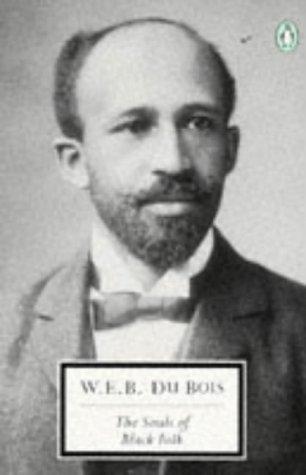
Talk to The Souls of Black Folk like its author wrote you back.
Get the ideas that fit your life — not generic summaries.
- Chat with the book
- Audiobook-style main ideas
- Adapts to your life and goals
- Helps you take action
The Souls of Black Folk, in detail
The Souls of Black Folk, published in 1903, is W.E.B. Du Bois's attempt to describe the inner life of Black Americans at the dawn of the twentieth century — what he called the "problem of the color line." The book combines essays on Reconstruction history, sociology, education policy, and personal memoir with spiritual meditations and music. Each chapter is prefaced by a few bars of a Negro spiritual, placed alongside a quotation from white European verse — a formal choice that enacts the double consciousness Du Bois describes in the prose.
The concept of double consciousness is the book's most lasting contribution to American thought. Du Bois argues that Black Americans live behind a veil, always seeing themselves through the eyes of a white world that measures them by a standard they did not set. This produces a fractured self-awareness: to be American and to be Black is, in Du Bois's analysis, to hold two warring identities, two unreconciled selves. The gift — if it is a gift — is a second sight that comes from living in two worlds at once. The cost is exhausting.
Much of the book is historical and polemical. Du Bois provides a meticulous account of the Freedmen's Bureau and the betrayal of Reconstruction — the period after the Civil War when Black Americans briefly held political power before being systematically stripped of it. He argues directly against Booker T. Washington's program of industrial education and accommodation, insisting that political rights and higher education, not just vocational training, are essential to Black advancement. This debate — between Washington's pragmatic accommodationism and Du Bois's demand for full citizenship — was the defining political argument of the era.
The most intimate chapters are personal. Du Bois writes about teaching in rural Tennessee, about the death of his infant son, about what it means to grow up Black in New England. These passages bring the analytical arguments down to a human scale and make clear that what is at stake is not only policy but the psychic costs of living under a system designed to diminish you. Over a century later, the book retains both its sociological precision and its sorrow.
The big ideas
- 1.
Double consciousness describes the condition of living always behind a veil, seeing yourself through the hostile gaze of a white world and never through your own eyes alone.
- 2.
The 'problem of the color line' is Du Bois's framing for the defining political challenge of the twentieth century — and his prediction that it would be global, not just American, proved accurate.
- 3.
Reconstruction was not a failure born of Black incapacity — it was a deliberate political betrayal by white Southerners and Northern indifference, and its collapse had consequences that lasted a century.
