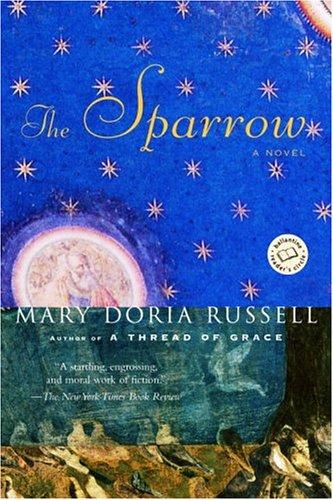
Talk to The Sparrow like its author wrote you back.
Get the ideas that fit your life — not generic summaries.
- Chat with the book
- Audiobook-style main ideas
- Adapts to your life and goals
- Helps you take action
The Sparrow, in detail
The Sparrow opens with its ending: Father Emilio Sandoz, a Jesuit priest and linguist, has returned to Earth as the sole survivor of humanity's first contact mission to the planet Rakhat, broken in body and will in ways the novel withholds until the final chapters. The book then tells two interleaved stories — the gradual unfolding of how the mission went catastrophically wrong, and the warmth and intelligence of the group of scientists and priests who set out with the purest motives imaginable.
Russell's central argument is essentially theological: that good intentions, competence, and genuine love are not enough to protect you — or others — from disaster. The Jesuits are drawn to Rakhat by music broadcast from the planet, and their mission is organized with care, courage, and deep faith. The horror that results is not the product of negligence or arrogance. That's the point. The novel explores the problem of suffering not as an abstraction but as a plot mechanism: why does God allow the worst to happen to the most devoted?
What makes the book distinctive is its willingness to be warmly human before it destroys you. Russell writes the pre-mission section with genuine comedy and tenderness — the ensemble of characters who eventually form the crew are charming, funny, and carefully individuated. The reader invests in them precisely because the frame has already told us they will not survive. This structural decision — grief before loss — is unusual and works almost devastatingly well.
The Sparrow is not easy reading, and its final act contains content that requires a content warning. Readers who need fiction to protect its protagonists, or who cannot engage with unresolved theodicy, will be miserable. For everyone else — particularly those who wrestle with religious faith, or who are interested in first-contact fiction that takes anthropology seriously — it remains one of the most emotionally ambitious novels of the 1990s.
The big ideas
- 1.
The novel's central wound: good intentions carried out with competence and love can still cause irreversible harm. There is no moral exemption from consequence.
- 2.
Russell structures the narrative so readers grieve the characters before witnessing their destruction — the warmth of the ensemble is a deliberate trap.
- 3.
The Jesuits' faith is presented as genuine and intellectually serious, not as a target for ridicule. The novel's critique is from inside belief, not outside it.
