History · Book club
The Story of Art book club questions
Here are 12 book club questions for The Story of Art by E.H. Gombrich, ordered to open easily and end somewhere worth arguing about. Copy them, print them, or bring them up one at a time.
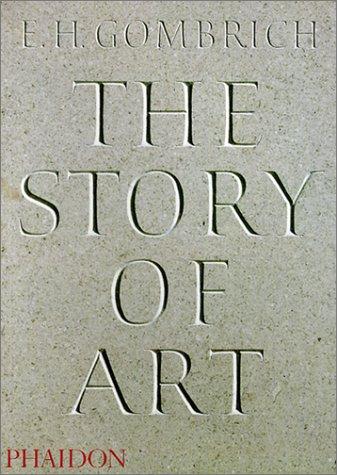
The Story of Art, first published in 1950 and revised across sixteen editions, is the most widely read introduction to art history ever written.
E.H. Gombrich · 1950 · 8h 45m
Full summary and key takeaways →The 12 questions
- 1.
Gombrich opens with 'There is no such thing as Art. There are only artists.' What does he mean, and do you find it a useful reframe?
- 2.
Think of an artwork you've experienced that felt very different from the Western tradition Gombrich describes. What different problems of representation was it solving?
- 3.
The 'schema' concept — inherited conventions modified over time — suggests artists are always in conversation with predecessors. Does that match your intuition about creativity?
- 4.
Gombrich suggests Egyptian art was not primitive but based on a different logic. Does learning the logic change how you see it?
- 5.
Which period or movement in art history do you find most surprising when you understand the problems the artists were actually trying to solve?
- 6.
Gombrich is willing to say some things are more accomplished than others. Is aesthetic judgment separable from historical context for you?
- 7.
The book treats perspective as one solution to a problem of representation — not the obvious truth. Does that reframe how you see photographic naturalism in contemporary visual culture?
- 8.
Modern art's difficulty for general audiences is a persistent cultural fact. Does Gombrich's historical explanation — that naturalism was exhausted — make the difficulty more intelligible?
- 9.
The book's coverage of non-Western art is limited and acknowledged by Gombrich as a limitation. How should that affect how you use the book?
- 10.
Is there an art form outside fine art — graphic design, cinema, video games — where you can see a similar dynamic of inherited schemata being modified by successive makers?
- 11.
What would it mean to write a Story of Art today that took non-Western traditions as seriously as Gombrich took the European one?
- 12.
Gombrich says art works by activating and adjusting expectations. Does that match your experience of encountering a work you found powerful?
How to run the discussion
- Pick six to eight, not all of them. An hour of real discussion covers fewer questions than anyone expects, and racing the list is what makes a book club feel like homework.
- Open with what people noticed, not what they concluded. Asking for a verdict first hardens opinions before anyone has heard each other.
- Let the disagreement run. The questions below that split a room are the ones worth the time; the ones everyone answers the same way can be skipped.
- Ask the quiet person a specific question. A direct, narrow question is far easier to answer than an open invitation to contribute.
Themes worth steering toward
If the conversation stalls, these are the threads that usually restart it.
Common questions
What are good book club questions for The Story of Art?
Here are 12 book club questions for The Story of Art by E.H. Gombrich, ordered to open easily and end somewhere worth arguing about. The strongest openers ask what each reader noticed rather than what they concluded, and the discussion usually turns on art history, visual perception, style and tradition.
How long should a book club discussion of The Story of Art last?
Most groups run 60 to 90 minutes of actual discussion. That is roughly six to eight questions, not all of them, so pick the ones that suit your group rather than working down the list in order.
What are the main themes in The Story of Art?
Art history, Visual perception, Style and tradition, Making and seeing, Western culture. Those are the threads most likely to divide a room, which makes them the useful places to steer a discussion that has gone quiet.
Picking the next one? See books like The Story of Art or questions for other book club picks.
