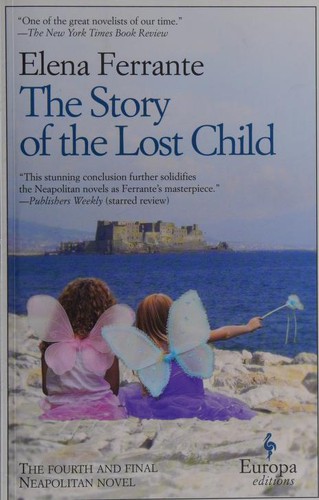
Talk to The Story of the Lost Child like its author wrote you back.
Get the ideas that fit your life — not generic summaries.
- Chat with the book
- Audiobook-style main ideas
- Adapts to your life and goals
- Helps you take action
What it argues
The Story of the Lost Child is the fourth and final volume of Elena Ferrante's Neapolitan quartet, covering roughly thirty years of Elena Greco's life from the late 1970s through the early 2010s. Elena, now a published author and separated from her first husband, returns to Naples and to a proximity with Lila that re-activates everything unresolved between them. The two women are middle-aged, then aging, then old. Their children grow up around them. The neighborhood keeps reasserting its claim. And the novel's title, withheld until late, lands with the weight of everything that has preceded it.
The book is partly about what happens when you have run out of escapes. Elena's career is real but fragile, her personal life in constant reorganization, her relationship to her own intelligence still shadowed by Lila. Lila meanwhile has retreated inward, refusing to participate in the world's expectations of her, and her mind begins to do something frightening at the edges. The friendship — rivalry — mutual possession between these two women finds its final form here, stripped of the projections that accumulated over the first three volumes.
What it gets right
- 1.
The childhood friendship between Elena and Lila is the load-bearing structure of the series, and this volume shows what it looks like when that structure is tested by old age and catastrophic loss.
- 2.
Ferrante treats female aging honestly and without sentimentality — the body changes, ambition shifts, and the world's regard diminishes in ways neither character accepts gracefully.
- 3.
The lost child of the title is never one thing; it accumulates meanings across the final third of the book in a way that makes re-reading the earlier volumes different.
What it covers
Who wrote it
Elena Ferrante is the pseudonym of an Italian novelist whose identity has never been publicly confirmed. Her Neapolitan quartet — My Brilliant Friend, The Story of a New Name, Those Who Leave and Those Who Stay, and The Story of the Lost Child — sold millions of copies worldwide and is widely considered among the defining literary works of the early twenty-first century. She has also published The Days of Abandonment and Troubling Love. Her work is notable for its unflinching treatment of female interiority, class, and the violence embedded in ordinary life.
