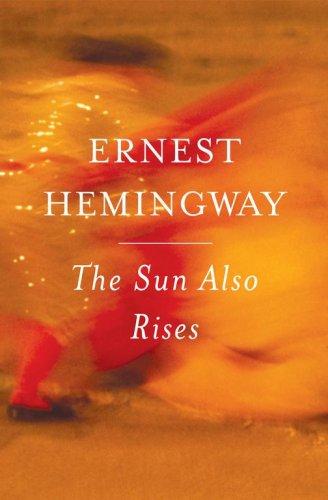
Talk to The Sun Also Rises like its author wrote you back.
Get the ideas that fit your life — not generic summaries.
- Chat with the book
- Audiobook-style main ideas
- Adapts to your life and goals
- Helps you take action
What it argues
The Sun Also Rises is Hemingway's first novel, published in 1926, and it remains the sharpest portrait of the "Lost Generation" — the young Americans and British expatriates who drifted through Paris and Spain in the years after World War I, drinking heavily and searching for something they couldn't name. The narrator, Jake Barnes, is an American journalist living in Paris; he loves Lady Brett Ashley, a beautiful, restless Englishwoman; and he cannot have her, for a war wound has left him impotent. That wound, mostly undescribed, hangs over every page.
What the book is really about is people trying to outrun feeling. Jake and his circle — Brett, the Jewish writer Robert Cohn, the dissolute Mike Campbell, the earnest Bill Gorton — move from café to café in Paris and then to Pamplona for the running of the bulls. They drink too much. They quarrel. Cohn punches people. Brett goes off with a young bullfighter named Romero, who is the one figure in the novel who has genuine skill and dignity. The fiesta is vivid and brutal; the corrida sequences are some of the finest writing Hemingway ever did. Then it all ends, as these things do, in anticlimax.
What it gets right
- 1.
The iceberg theory in practice: Jake's impotence, the source of the novel's central anguish, is barely named. The emotion lives in the white space.
- 2.
The Lost Generation was lost in a specific way — not directionless but undone by the war's erasure of the values they'd been raised to believe in.
- 3.
Brett Ashley is not a femme fatale; she is as damaged as Jake, using charm and beauty to manage the same void everyone else drinks through.
What it covers
Who wrote it
Ernest Hemingway (1899–1961) was an American novelist, short story writer, and journalist whose spare, direct prose style influenced virtually every English-language writer who came after him. He served as an ambulance driver in World War I, was badly wounded, and spent much of the 1920s as a foreign correspondent in Paris. His major works include A Farewell to Arms, For Whom the Bell Tolls, and The Old Man and the Sea, for which he received the Pulitzer Prize in 1953. He was awarded the Nobel Prize in Literature in 1954.
